Instrument

violin
François Louis Pique
Paris,
1797
played by
Eline Liselotte van Dijk
Eline Liselotte van Dijk

*1758 , Roissy-en-France †1822 , Charenton-Saint-Maurice
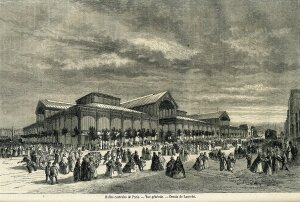
François-Louis was born in the village of Roissy-en-France, just outside Paris. His father, Louis Pique, was the gamekeeper on the local estate. It is believed that he left for Mirecourt as a boy to apprentice with Edmond Saunier. Although sources mention that he moved to Paris as early as 1787, the first documents confirming this do not appear until ten years later. By then, he had established himself as a violin maker and dealer and had a modest workshop behind Les Halles in the liveliest part of Paris.
But even before the revolution broke out, a shift had already taken place in the tastes of musicians. This was brought about by the arrival of the violin virtuoso Viotti in 1782. Viotti owned a violin from 1709, built by Antonio Stradivari. He promoted it wherever he could. He preferred his Stradivari to instruments by German and French makers because it allowed him to play with a warmer—but above all, more powerful—tone using a different technique. He also taught this to his students Rudolph Kreuzer and Marie-Pierre Baillot. Thanks to these highly regarded musicians, the new Italian instruments quickly gained great prestige. During his ten-year stay in Paris, Viotti was influential enough to change the tastes of musicians and audiences—not only through his performances as a violinist and teacher, but also because he served as director of several highly sought-after French and English opera companies. François-Louis Pique noticed that the public’s preference for the French model was beginning to wane and followed suit by building violins based on the Italian school.
During that transformation, François-Louis Pique sought someone who could work with him to meet the demand for new instruments. It was the violinist Michel Woldemar who recommended Nicolas Lupot to Pique for this purpose. At the time, Lupot was still living in Orléans and was a relatively unknown but talented violin maker. Pique, however, was too cautious to immediately enter into a full working relationship with Lupot. First, he asked Lupot to send him a few instruments that he could sell for him in Paris. He then sent wood to Orléans so that Lupot could build violins for him. Lupot initially returned them unvarnished, but after Pique saw the results of the second shipment, he was struck by the exceptionally beautiful, Italian-style varnish on a finished violin that Lupot had included. From that moment on, he entrusted him with building complete instruments and made his first attempt to bring Lupot to Paris.
In June 1789, the Great Terror broke out around François-Louis Pique, culminating in the storming of the Bastille. The aristocracy was forced to flee to escape the guillotine. Many, however, were too late. Their properties were confiscated and sold to citizens to cover the enormous debts with which Louis XVI had burdened the country.
In those turbulent and uncertain times, François-Louis Pique married Marguerite-Agnes Payen in 1791. A month later came the massacre on the Champs de Mars—a violent event that would preoccupy the people of Paris more than anything else. There was hardly any attention paid to music, let alone to new instruments. His wife, Marguerite-Agnes, was of humble origins, but her father managed to purchase several expropriated properties for a small sum and subsequently became a wealthy man. He himself moved from a small butcher’s cottage to a stately home. In 1792, the year the great Paris uprising broke out and the National Assembly abolished the monarchy, the first daughter of François-Louis and Marguerite was born.
With his newly acquired family fortune, François-Louis Pique purchased another workshop, also located near the Halles. There, he began to make a name for himself as a maker of violins built according to a new design. In 1796, he invited Nicolas Lupot to come to Paris.
During and immediately after the Revolution, the civil administration was also in a state of chaos. Due to the reorganization of the Parisian arrondissements and the flight of the clergy, the ecclesiastical administration was not kept up to date either, while the civil registry had not yet been organized according to the state’s new rules. As a result, with the exception of the birth certificates of his three children, there are no official records concerning François-Louis Pique until 1818. The first record of a family event registered in the new civil registry is the marriage of his eldest daughter, Agnès, in 1818.
The wedding of his youngest daughter, Elisabeth, took place after François-Louis Pique had already retired; she married Nicolas Lété, a merchant dealing in musical instruments, strings, and exotic goods in Paris, in 1822. His son-in-law also imported wood from the French colonies, which he used, among other things, to supply Parisian instrument makers with materials for their instruments.
Five years later, after losing an arm, François-Louis Pique was forced to stop working and moved to his country home on the Marne. He died just a few months after his daughter’s wedding in 1822. As far as is known, François-Louis Pique had no apprentice or successor. Only his son-in-law Nicolas called himself “Pique’s successor,” but that was purely in name; he himself never built a single instrument.
The violins that Pique made during his early period were based on the French tradition; well-built, arched, and finished with a somewhat flat, reddish-brown varnish. At that time, he made not only violins and cellos, but also theorboes and lutes. His instruments were successful until Viotti introduced his Italian violin in Paris. Musicians and audiences began demanding that style from French makers as well. As a result, Pique found himself compelled to build a model that was equivalent in tone and volume to those of the Italian school.
He altered the corners, but more importantly, he adjusted the curvature to match that of Stradivari’s instruments. He also made some minor changes to the appearance of his instruments. To do so, he used the beautiful, deep reddish-brown oil varnish similar to Lupot’s or one that closely resembled it. He applied this varnish quite thickly. Together with other minor changes, this gave his instruments a more powerful, more Italian appearance.
Several decorated violins by Pique are known to exist; on the back of one particularly notable example from 1810, a romantic landscape is painted. Its ribs are adorned with several French lilies.
The François-Louis Pique violin in the collection of the Musical Instrument Fund dates from 1797, three years after he resumed his collaboration with Nicolas Lupot in Paris.
Millot, S., 2015, Nicolas Lupot, Messigny-et-Vantoux.
Millot, S. and Perrin, N. 2017, Lectures 1–4; European Stringed Instrument Making Day. Cordes sur Ciel.
Vannes, R., 1999, *Universal Dictionary of Instrument Makers*, Spa.
Henley W. , 1959 Universal Dictionary of Violin and Bow Makers. Amati Publications. London.
Sibre, A. 1824, *La Chélémonie ou Le Parfait Luthie*, Paris.
Tarisio; the Cozio archives, accessed in 2019.
Geneanet, accessed in 2019.
Archives Nationales de France, accessed in 2019.