Instrument

violin
Vincenzo Panormo
London,
± 1790
played by
Hae Jin Park
Hae Jin Park

*1734 , Monreale (Palermo) †1813 , Londen
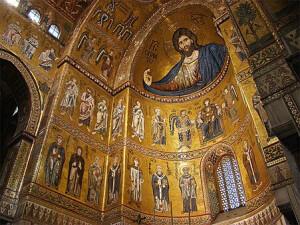
Just a stone’s throw from Palermo lies the town of Monreale, which overlooks the Oreto River that connects the two cities. Vincenzo Trusiano was baptized in Monreale Cathedral a few days after his birth in 1734. His father, Gaspare Trusiano, was a musical instrument maker who built double basses in addition to wind instruments. Gaspare had likely learned this craft from the small but thriving community of instrument makers that had been based in a neighborhood along the Oreto River in Palermo since the 16th century.
In the archival records, Gaspare was still referred to as an ordinary instrument maker in 1752, but five years later he appeared in the church archives as a “maestro.” Vincenzo was already working with him at that time; the same archives show that Vincenzo was one of the three “maestri” who had made instruments for the monastery. That he, like his father, did not make only wind instruments at that time is evident from a double bass preserved in Palermo bearing the label “Vincenzo Trusiano, fecit Panormo, 1752.” The Trusiano family had by then moved from Monreale to the center of Palermo.
Since the instruments produced by Palermo’s luthiers met most of the demand for musical instruments in Sicily, Gaspare turned to Naples, where he moved with his sons Vincenzo and Giovanni around 1759.
Naples offered Gaspare and his sons infinitely more opportunities than Palermo. King Charles III had transformed the city into one of the most impressive capitals in Europe. Nowhere else was opera as vibrant as in Naples. To meet the demand for musicians, there were four conservatories in Naples, each with its own specialty. Music was accessible to all segments of the population. Apart from Naples’ small, wealthy upper class, the majority of the people lived in extreme poverty. Famine regularly drove groups of starving people from the surrounding region into the city. Between 1764 and 1767, 150,000 people died of starvation in and around Naples, and many children were left in the care of orphanages or almshouses. Music, however, was so deeply intertwined with Naples that even the children in these institutions received excellent instruction in singing and violin. Since the 17th century, Naples had been Europe’s leading source of prima donnas, castrati, and violinists. Around that time, more than a hundred instrument makers—including some thirty violin makers—were working in Naples, with Postiglione and the Gagliano family together dominating the market.
Shortly after their arrival in Naples, Gaspare and his sons founded a company called “Panormo & Figli, Giovanni e Vincenzo,” which would become the leading manufacturer of wind instruments in Naples. They had by then added “Panormo,” the Latin name for Palermo, to their surname, Trusiano. Vincenzo married around 1762. At that time, famine struck again with full force, and the people of Naples rose up in revolt against the ever-increasing poverty. The army intervened frequently and brutally. The unrest, hunger, and violence were likely the reason Vincenzo and his wife left Naples in 1764 and moved to Rome.
In Rome, however, he did not find what he had expected. Shortly after his arrival, he had a son, Francesco, but his wife presumably returned to Naples as early as 1767 to give birth to their second son, Joseph. Vincenzo, too, did not stay long in Rome. Together with his wife and their two sons, he traveled via Marseille—where he made a few wind instruments and violins—on to Paris. He was likely unaware that the powerful guilds held sway there. Only Parisian artisans who were members of these guilds were permitted to work in the city.

Bastille and Porte Saint-Antoine, as seen from outside the city walls, by J.B. Lallemand. Online, Bibliothèque Nationale de France
Others had to rely on free zones such as Faubourg Saint-Antoine, where craftsmen had been allowed to set up shop freely since the 15th century. These were lively, rebellious neighborhoods on the outskirts of the city where artisans did not have to submit to the strict authority of the powerful guilds. The freedom that prevailed in these free districts gave artisans the space to produce their finest work—often pieces that involved multiple disciplines—a practice that would never have been permitted by the guilds elsewhere in Paris. Because they worked outside these guilds—which held a monopoly on production and set market prices—poverty in the sanctuaries was often severe. Vincenzo, too, was no exception.
Due to the complex Parisian guild system, Vincenzo was presumably unable to find a way to obtain sufficient and suitable wood. Partly because of the harsh conditions in the sanctuaries, he left again after two years. London seemed more appealing; it was more than twice the size of Paris, but more importantly, Italian music was exceptionally popular there. This was particularly true around the King’s Theatre, where 112 performances of Italian operas were staged over 22 seasons. Italian opera was very popular among the elite. As a result, London attracted many Italian composers, singers, and other musicians. The musical culture was dominated by many wealthy families who took turns hosting performances both in the city center and at their country estates. In addition to these performances, there were also the concerts and operas organized by more than a hundred “musical societies.” When Vincenzo and his family arrived in London in 1772, hundreds of Italians were working in the city.

Label from a viola dating from Panormo's London period. Image courtesy of Andrew Fairfax
Vincenzo opened his first store, “Panormo’s Music Shop,” in the Soho neighborhood, which fell under the parish of St. Martin-in-the-Fields. His third child was born there in 1774 and was buried shortly thereafter. Business was going well for him; he built instruments and advertised in various newspapers. A viola bearing his label from that period is known to exist.
However, his success there would also be short-lived. Beginning in 1778, anti-Catholic sentiment flared up in London, culminating in acts of violence against Catholics. Their property was confiscated, their homes and churches were destroyed, and their belongings were burned. This popular uprising was a protest against a law granting Catholics greater freedoms, but it nearly resulted in a revolution against the government. A year later, in 1779, Vincenzo fled the rapidly spreading violence.

"Classe des nouveaux Maîtres" 1779, Vincenzo's (5th from the top) registration as a master violin maker in Paris.
In Paris, the power of the guilds had been somewhat curtailed. For the first time, foreigners were allowed to settle freely in the city. Vincenzo Panormo returned to Paris, was registered in the city’s guild register in 1779 as a “master violin maker,” and started a business again. He started out in the lively but poor neighborhood next to Les Halles and moved twice more over the course of eight years, until he finally settled near the Palais Royal du Louvre in 1788. What initially seemed like a good choice turned out differently a year later.
Armed revolutionaries had set up a guillotine a short distance from Vincenzo’s shop. The first executions took place there immediately. A year later, 2,693 death sentences had been carried out in Paris, including hundreds in the square at the end of the street where he lived. Paris had entered a period of terror, popular fury, and rebellion. With so much social unrest, there was no work for violin makers. Vincenzo did not last long in his new workshop. The tensions in the city erupted in 1789 with the storming of the Bastille. That marked the beginning of the French Revolution. Hatred now turned against foreigners as well, and after ten years of working in Paris, he was in danger of losing everything; for the third time, Vincenzo Panormo was forced to flee.
There is strong evidence that he worked for John Betts for some time
Along with a stream of French refugees, he returned to London in late 1790, where calm had now been restored. And once again, Vincenzo settled in Soho, a neighborhood that, even before their arrival, was three-quarters French Huguenots. These were often skilled artisans such as goldsmiths, silversmiths, hatmakers, weavers, and musical instrument makers. The area became even more vibrant after the Royal Academy established itself in Soho, attracting many hundreds of painters and sculptors from all over Europe. Several stringed instruments by Vincenzo from that period are known to exist, including a cello with a handwritten label that he built in 1791. He also continued to make wind instruments.
There is ample evidence that he worked for John Betts for some time. By importing the very finest master instruments from Italy and giving them widespread publicity, it was partly thanks to John Betts that the London public began to appreciate instruments based on Stradivari’s model. Only highly skilled violin makers, such as Joseph (III) Hill and Henry Hill, worked for Betts. As a violin maker, Vincenzo had extensive international experience and still maintained connections in Italy that may have been of service to Betts.
The reason Vincenzo went to Ireland is unknown, but it is certain that many people fled Soho due to the rising anti-French sentiment. It is likely that Claude Pierray asked him to come to Dublin. There, Pierray had a workshop where Vincenzo worked for some time. He also built instruments for himself, as evidenced by those he crafted for the Duke of Leinster. Starting in 1797, he worked for two years for Bartholomew Murphy, a violin maker in Cork. He then returned to Dublin, stopping in Kilkenny halfway through the journey to build another cello: “Vincenzo Panormo/fecit Kilkenny/Irelande, 1799.”
At the age of sixty-seven, Vincenzo returned to London for the last time. There he ended up in St. Gilles, the part of Soho where living conditions were among the worst in London. In the twelve years leading up to his death in 1813, he must have worked for other violin makers, presumably even for Hill, but this is not documented.
Many questions about Vincenzo’s life and work remain unanswered. Often, it was harsh circumstances that forced him to seek his fortune elsewhere time and again. It was not uncommon for him to have to work in poor conditions and with whatever materials were available. It is remarkable that, despite this, he crafted such exquisite instruments. Vincenzo is now regarded as the most influential violin maker in late-eighteenth-century England.
In his early years, Panormo still made instruments based on Amati’s designs, but by the end of his first period in Paris, he was already building instruments more in line with Stradivari’s principles. His style was still somewhat undeveloped, but the instruments were already built with great skill. The influence of Nicolas Chappuy is also evident; his work bears many similarities to that of Panormo. Later, his work became more refined, though he did not pay excessive attention to the finish. On many of his instruments, the marks left by scrapers and other tools are still visible. His edge inlay is a deep black, which gives his instruments a distinctive appearance.
The wood used for the tops of the violins from his second period in France was characteristic of virtually all Parisian luthiers; it came from the Vosges Mountains and was supplied by the guilds. Noteworthy is the top of a violin he built in 1790, for which dendrochronological analysis has recently shown that it comes from the same tree as that of a violin later built by Nicolas Lupot. The sycamore wood he used in London is particularly beautiful. It was beautifully flamed and had many color variations. The wood he used in Ireland was mostly of local origin. It is known that Vincenzo cut up the wood from a billiard table in Dublin and used it to build several instruments.
‘Of particular note is the top of aviolin; dendrochronological analysis has shownthat it comes from the same tree as that of aviolin that would later be built by NicolasLupot’
During his second period in London, his work began to resemble Stradivari’s more and more; he even adopted Stradivari’s habit of adding black borders along the pegbox. The curves and the f-holes are symmetrical. The f-holes are narrow and vertical at first; as he focused more on Stradivari’s style, they became wider and took on a slight slope. The scroll is deeply carved and elegantly shaped from the very beginning.
In his early period, Panormo used a light gold to orange varnish of high Italian quality. After that, he seems to have often relied on local sources for his raw materials. Once he had developed a good varnish, he would take the ingredients with him and adapt the recipe later. Starting with his second period in London, his varnish became deeper in color, redder, and applied more thinly.
The 1810 violin in the collection of the Musical Instrument Fund dates from his final and most “mature” period.
Harrison R., 1998, The Panormo Family, The Troubadour.
Vannes, R., 1999, Universal Dictionary of Instrument Makers, Spa
Baker T, Dilworth T en Fairfax A., 2001 The British Violin, Londen.
Carlson B., Schmitt J. F., Moroder I., Leonhard F., Italian & French Violin Makers - Vol. 1, 2001, Keulen
Westbrook J., 2012, Louis Panormo and His Contemporaries, Cambridge.
Tarisio, the Cozio archive, Vincenzo Panormo, by Andrew Fairfax.
Fairfax A., Panormo – the life and work of Vincenzo and his sons. Exhibition Catalogue, London
Milliot, S. and Perrin, N. 2017, Lecture 3; European Stringed Instrument Making Day. Cordes sur Ciel.

