Instrument

violin
Joseph Hel
Small,
1889
played by
Olga Göschel
Olga Göschel

*1842 , Mazirot †1902 , Lille
Joseph Hel liked to illustrate just how determined he had been as a boy to become a violin maker by telling the story of how he would occasionally leave the flock of sheep he was supposed to watch over on his own to go and look inside the workshops in Mirecourt where violins were made.
He was born in Marizot, where his father, Pierre Joseph Hel, was a small-scale winegrower who owned a plot of land that he tended together with his wife, Anne Françoise Lucas. Joseph was their only child and was born three years after their marriage. At the age of fourteen, he began an apprenticeship as a violin maker with François Salzard in Mirecourt. As was customary in Mirecourt, the apprenticeship lasted four years. Joseph Hel also took that long to complete his training and then remained for another year as an apprentice to François Salzard.
Amid the advance of industrialization, it was no easy task to become a traditional violin maker. Mass production was seen in all sectors as the solution to staying ahead of international competition. Many violin makers went along with this trend and tried to counter the flood of cheap violins from Markneukirchen and the Czech Republic by setting up violin factories.
In the first few years after completing his training, Joseph Hel had met Didier Poirot and Laberte Humbert. Through them, he had seen where that new trend was leading. Didier Poirot had just developed a process for mechanically pressing thin layers of wood into violin parts. And at Laberte Humbert, he saw how workers with limited training were making instruments in large production facilities—methods that did not appeal to him.
From Mirecourt, he went to Paris to work for Sébastien Vuillaume. A little over a year later, he left there as well, spent a few months observing the workshops of the Martin company, where all kinds of musical instruments were made, and went to Aachen to build instruments for Nicolas II Darche. At Darche’s workshop—where he was trained by François-Nicolas and Jean-Baptiste Vuillaume—he found the level of craftsmanship he had been seeking.
This focus on his future as a violin maker lasted from 1861 to 1865. That year, he married Anne Varin and started his own business in a small chambre d’hôte in Lille. He moved four more times before they were able to move into a beautiful, spacious building on Rue Nationale. Their marriage lasted only until 1879. Anne died childless at the age of 39. Shortly thereafter, he married Marie Salmon. He listed his occupation as “marchand luthier et fabricant d’instruments de musique.” A year later, their daughter Louise was born.
In 1874, Joseph was appointed violin maker at the “Académie Impériale et Conservatoire de Musique” in Lille. It was an institution that provided training for musicians throughout northern France. His appointment was remarkable; at the time of his appointment, Joseph Hel had built only five instruments under his own name, but that was enough to convince the administration.
The institute had about 1,000 students. As a result, he came into frequent contact with musicians and repaired and restored their instruments. It also led him to make improvements to his own instruments. He devised a new drying method for tonewood and standardized the connection between the tuning peg and the sound hole, enabling quick and precise tuning.
In 1884, Joseph’s son Pierre was born. Joseph often and gladly participated in exhibitions that included competitions. He first entered an exhibition in Lille, then in Antwerp, and won a gold medal at both events; two years later, he repeated that success in Liverpool.
In 1889, he submitted two quartets to the “Exposition Universelle de Paris,” an event for which the Eiffel Tower was built, in which 61,000 exhibitors participated, and which attracted 32 million visitors. Here, too, he won a gold medal. The jury report presented to him stated that the sound of the instruments he had submitted “was unparalleled and far surpassed the others.” And further on: “They possess the mellowness of antique instruments.” The jury was also unanimous in its praise regarding the construction and finish.
Over the next five years, he worked hard on his body of work, building about 40 instruments a year. In addition, 1893 marked the beginning of a period during which he served frequently as a judge. In 1893, he served on juries in Munich, Chicago, and Monaco; in 1895 in Bordeaux; in 1896 in Rouen; and in 1897 in Rennes. At all of these exhibitions, as a member of the jury, he was only allowed to participate “hors concours.”
At the 1897 World’s Fair in Brussels, he declined to serve on the jury so that he could enter the competition himself with his most recently built instruments. Unlike the World’s Fair in Paris, which was boycotted by many countries because of its anti-monarchist theme, virtually all European countries participated in the Brussels exhibition. Joseph Hel exhibited two violins and a cello there. For that entry, he received the Diplôme d’Honneur.
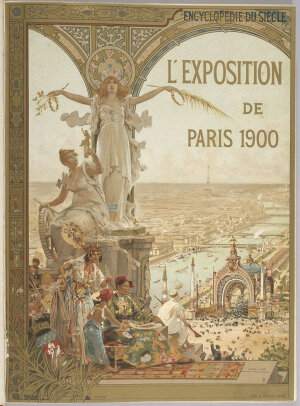
In 1900, Joseph Hel himself participated in the “Exposition Universelle de Paris.” Once again, he won the Grand Prix. This time, 76,000 exhibitors took part, and 50 million people came to see the exhibition. The violin makers Gand and Bernardel, successors to Nicolas Lupot, had also participated in both exhibitions, but they finished behind Joseph Hel. Eleven years after his previous success, Joseph Hel was still among the greatest violin makers in France.
After his appointment as violin maker at the conservatory, he paid little attention to France. He built up a large clientele in Belgium, Switzerland, and the United States, where he traveled twice. In England as well—where French violin makers were in high demand—he managed to gain a foothold without too much difficulty. His most important business partner was the prominent British violin maker and dealer W. E. Hill.
Through Hill, Joseph Hel came into contact with the oil magnate and collector David Laurie. He lived in Scotland but also owned a castle in Brussels. Laurie had one of the most valuable private collections of stringed instruments in the world. He himself played the Stradivari “Alard” violin, but he also owned 10 other instruments by this maker. The rest of his collection consisted of Lupots, Guarneri del Gesus, Bergonzis, Vuillaumes, and Amatis. It was not W.E. Hill, but Joseph Hel who was commissioned in 1880 to maintain Laurie’s collection and restore it where necessary.
His son Pierre had left for Mirecourt at the age of 12, where he trained as a violin maker under Gustave Bazin. He then worked for two more years with several violin makers in Mirecourt, but ultimately decided to return to Lille.
The highlight of Joseph’s career came in 1900, the year his son returned for good. Together with Pierre, he organized the “Exposition Universelle de Paris,” and when Joseph Hel was awarded the “Grand Prix,” Pierre was there to witness it.
Joseph Hel, however, had only a short time left to live. He died at the age of 60 on March 14, 1902, in Lille. Until shortly before his death, he continued to exert influence over the staff and his students. Pierre, who was only 18 at the time, took over the business after his death.
Under Pierre Hel, the workshop continued to grow and achieve international acclaim. As a tribute to his father, with whom he had always had a very close relationship, Pierre primarily built violins modeled after his father’s in the early years following his father’s death. Only then did Pierre strike out on his own.
Although Joseph Hel was not self-taught, the work of François Salzard, who trained him, was nowhere near on par with Joseph Hel’s. After Salzard, there were no others with whom Joseph Hel had apprenticed. His own perfectionism is seen as the driving force behind his ability to build instruments of such high quality. His work on the exceptional instruments in Laurie’s collection undoubtedly contributed to this. Few other violin makers had the opportunity to study so many instruments by the great masters.
Initially, Joseph Hel made copies of the great Italian masters, including his “Stradivarius Moderne” from 1883 to 1889, but later he built instruments of his own design based on the early French style. They were virtually perfect both aesthetically and technically, and the instruments were also highly regarded for their sound.
It is believed that he built about 750 instruments; 600 numbered instruments under his own name, and the rest for others.
After a period during which he built only about 25 to 30 instruments a year for himself, that number rose to 40. In 1891, he began work on a violin that was numbered 259, and by 1899 he had completed number 498. Two years later, he had already built another hundred. He built his last violin in 1902.
Joseph Hel stamped his instruments on the outside, below the knob or on either side of it, with "J. HEL à Lille."
Leon Victor Mougenot, Charles Brugère, Auguste Marissal, and Paul Mangenot worked for him.
The Lille Academy and National Conservatory of Music, Centennial Book, Imp. du Progrès du Nord, Lille.
Cordonnier, A., 1989, Joseph and Pierre Hel, Two Instrument Makers and Collectors from Lille.
Carlson B., Schmitt J. F., Moroder I., Leonhard F., 2007, Italian & French Violin Makers, Keulen.
Jacquot, A., 1912, La Lutherie Lorraine et Française, Paris.
Henley W., 1959 Universal Dictionary of Violin and Bow Makers. Amati Publications. London.
Cité de la Musique/Musée de la Musique, Violins, Vuillaume, a 19th-Century French Master Luthier, 1998, Paris.
Vannes, R., 1999, *Universal Dictionary of Instrument Makers*, Spa.
Thöne J, 2008, Italian & French Violin Makers, Dubai.
The Violin-Times van 15-2-1894.
Piodras, H., 1924, Dictionary of Ancient and Modern Instrument Makers, Paris.
Tarisio, Cozio Archive, accessed in 2021.
Geneanet; accessed in 2021.
Archives Nationales de France, accessed in 2021.
Mesdemarches.culture.france, accessed in 2021.


