Instrument

violin
Giuseppe (Joseph) Gagliano
Naples,
1758
played by
Kilian van Rooij
Kilian van Rooij

*± 1725 , Napels †± 1800 , Napels
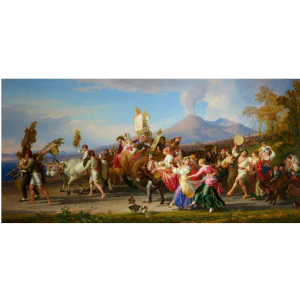
Religious life was omnipresent. Ecclesiastical institutions possessed enormous wealth and influence and served as large landowners, charitable organizations, and moral watchdogs. At the same time, the cult of miracles surrounding San Gennaro, the city’s patron saint, flourished. His famous miracle of the bleeding was regarded as a sign of protection or impending disaster and was a religious, social, and musical event.
Giuseppe was still young when Carlos of Bourbon took power in Naples. Inspired by the Enlightenment, he reformed the government and the economy and turned Naples into a more independent and prosperous kingdom. From a peripheral province of the Austrian Habsburgs, Naples grew into an independent capital with grand political, cultural, and economic ambitions, modeled after Paris and Madrid. At least, that is how his reign began. He considered himself the “True King of Naples” and turned out to have very specific ideas about what the grandeur of a great European court should look like.
He commissioned the construction of the “San Carlo,” an opera house that was to become the most beautiful and largest in Europe. New roads, aqueducts, and harbors were built. As the court grew, an unprecedented number of musicians also flocked to the city. Charles de Brosses, a writer and member of the Académie des Sciences, wrote that Naples had quickly become the musical capital of Europe. In 1759, Don Carlos de Bourbon handed over Naples to his son Ferdinand, who proved to be an enlightened despot and continued his father’s policies.
‘Under the Bourbons, Naples becameone of the four majormusical centers of Europe’
The four conservatories in Naples shaped the city’s musical culture. Originally, these were ecclesiastical institutions that educated orphans, but they had evolved into elite training programs for musicians. Many graduates found work at European courts, in churches, or at opera houses. In this way, Naples exported not only music, but also musicians and instruments. And in the wake of that, instruments made by the Gagliano family as well. The academies were run and funded by the nobility and the church and were therefore conservative. Church music (masses, oratorios) and opera constantly influenced one another.
Under the Bourbons, Naples became one of the four major musical centers of Europe. Alessandro Scarlatti and Giovanni Battista Pergolesi shaped the style of opera and church music far beyond Italy's borders.
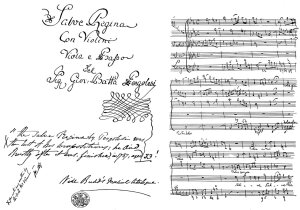
Reproduction of the original title page and score page of *Salve Regina* by Pergolesi. See sources¹
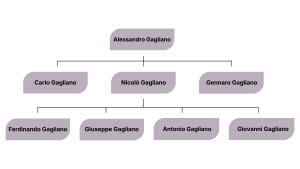
It was within this musical world that the Gagliano family made a name for itself. Giuseppe’s grandfather, Alessandro Gagliano (ca. 1665–1732), had been the family’s pioneer. Through his contacts with violin makers in Cremona, he brought Northern Italian influences to Naples. Alessandro’s sons, Nicolò and Gennaro, established the family as a leading name in Neapolitan violin making.
Unlike in Cremona, violin makers in Naples generally did not enjoy a high artistic status. They were viewed more as specialized artisans within a broader community of instrument makers. Neapolitan makers distinguished themselves from those in Cremona by taking a somewhat more pragmatic approach to violin making. While Cremonese instruments were often built for the aristocracy, collectors, and court musicians, Neapolitan instruments were geared more toward practical use in churches, theaters, and conservatories. This partly explains the greater variety in finish and choice of materials.
Giuseppe likely grew up in his father's studio, but based on research and stylistic similarities, experts now believe he was primarily trained by his uncle Gennaro.
Giuseppe was presumably born around 1725, shortly after his brother Ferdinando. Antonio followed in 1728, and much later, Giovanni. All four would go on to become violin makers. Their father, Nicolò Gagliano, was considered one of the foremost makers in Naples. He is said to have been a student of Omobono Stradivari, the son of Antonio Stradivari, who had worked in Naples for some time. Nicolò had contracts with three of the four conservatories and maintained or built instruments for their students and ensembles.
Giuseppe presumably grew up in his father’s studio, but based on research and stylistic similarities, experts now believe that he was primarily trained by his uncle Gennaro. According to Philip J. Kass, Giuseppe and Ferdinando remained involved with Nicolò’s workshop well into the 1750s before they moved over to Gennaro’s. In Kass’s opinion, Nicolò’s last instruments were built by Giuseppe. Nicolò was regarded as a prominent maker, but Gennaro is often considered a greater craftsman today.
As Giuseppe grew up and began building his own instruments, the situation in Naples deteriorated. The reforms initiated by Carlos de Bourbon proved disastrous. Poverty and a massive exodus from the countryside to the city led to overcrowding in Naples. Around 1764, thousands of Neapolitans died from malnutrition and disease. Only the Church still offered any systematic aid to the poor.
This economic downturn also affected violin making. Giuseppe’s father and brothers were able to continue making a living from their work for the conservatories. Giuseppe himself does not appear in their archives. He was, however, a prolific maker. Within the family, he seems to have held a relatively minor position. While Ferdinando and Gennaro developed a distinct style, Giuseppe appears to have often worked in collaboration with others.
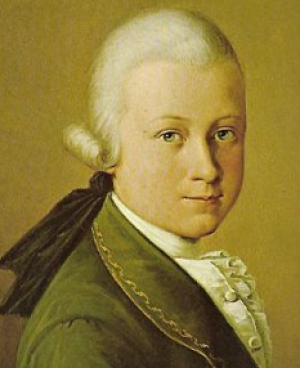
Wolfgang Amadeus Mozart at the age (14) when he visited Naples.
Despite Naples’ decline after 1764, Leopold Mozart was eager to visit the city. Wolfgang Amadeus performed several times at the Pietà dei Turchini Conservatory, gave a concert in June 1770 at the home of a British diplomat, and was introduced to musical and diplomatic circles. Amadeus Mozart found some of the Neapolitans’ customs “backward” and considered them “deeply superstitious.” But he was enthusiastic about the music in the city—especially the virtuosity of the violinists. Wolfgang Amadeus did make an impression on the Neapolitans and at court. However, it did not land him the position his father had hoped for.
‘When it comes to dating andattribution, labels throughout the entire Gaglianofamily are notoriously unreliable’
Beginning around 1780, Giuseppe entered into a partnership of sorts with his brother Antonio, who was three years his junior; they shared a workshop and built a considerable number of violins together. Their collaboration likely lasted until around 1800, during which time they used labels on which they both identified themselves as their father’s sons. “Joseph and Antonius Gagliano, sons of Nicolai”—and not as pupils of Gennaro. Instruments from that period are generally regarded as inferior to Giuseppe’s early work, in which he sometimes approached his father’s level of craftsmanship. Antonio is considered a less refined maker. No instruments made by him have been found after 1800.
On labels, Giuseppe used the name “Joseph” instead of “Giuseppe” with striking frequency. This made his name more accessible to the English, French, and German markets. Instruments made by the Gaglianos circulated throughout Europe via trade networks.
In fact, Antonio often used the Latin version of his name: “Antonius.” Labels bearing the names Joseph and Antonius appear on their shared label.
Joseph and Anthony Gagliano, sons of Nicholas
When it comes to dating and attribution, labels within the entire Gagliano family are notoriously unreliable. They were reused, forged, or shared among multiple family members. The archives also did not help with dating; they were not properly maintained, or documents were lost. Reliable information about the Gagliano family is therefore scarce.
As a result, it is difficult to clearly define Giuseppe’s body of work. Many instruments were not attributed to him until the nineteenth or twentieth century. Experts regularly reattribute works to the “Gagliano school” rather than specifically to Giuseppe.

Ferdinand IV of the House of Bourbon ruled Naples as an enlightened despot
Giuseppe’s active period is generally placed between approximately 1760 and 1800. Around or shortly after 1800, his name disappears. He may have died young or become part of a studio collective. The last decades of Giuseppe’s life coincided with a period of great political unrest. The French Revolution had repercussions in Naples, pitting revolutionary and royalist factions sharply against one another. Around 1790, this led to violent repression by the Bourbons. For violin makers and musicians, this instability meant economic uncertainty and the loss of patrons. It also marked a transition from aristocratic patronage to commercial production.
Although Giuseppe Gagliano is not widely regarded as a central figure in Neapolitan violin making, he is important for understanding the final phase of the Neapolitan school: the transition from individual mastery to more collective production and the complex collaborative relationships within family workshops.

"In your conception, the Virgin Mary was immaculate. Pray to the Father for us, whose Son Jesus you bore of the Holy Spirit." Religious text on a viola da gamba from the Gennaro family, NMAH Collection.
Like his father, Giuseppe built instruments clearly influenced by Stradivari, but with an unmistakable Neapolitan touch of his own. Early experts such as Lütgendorff noted around 1900 that he sometimes worked “without much care” when following his father’s models and carved remarkably irregular scrolls. Today, experts take a more nuanced view of this, making a clear distinction between his first 15 years or so and his later period of collaboration. He finished a single instrument in the style of Stradivari. He built not only violins, but also guitars and mandolins. In addition, a few small-sized violins, cellos, and violas by him are known to exist.
He finished his instruments with a thin, transparent coat of varnish—usually orange to golden brown—over a stained surface. This varnish is described as characteristic of his family’s tradition. He often affixed an additional label bearing a religious text to the inside of the top rib—a custom that was common throughout the family. Such a text not only reflected his personal piety but may also have served as “protection” against misfortune or illness.
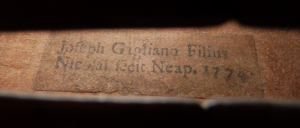
Photo courtesy of Tarisio

Back of the violin from the collection of the Musical Instrument Fund
Examples of his labels include: “Giuseppe Gaglianus filius Nicolai / fecit Neapoli, 1787,” “Giuseppe Galiano, son of Nicola / made in Naples, 1781,” “Joseph Gagliano, son of / Nicola and grandson of Januarius, made in Naples / 1793,” and “Joseph Gagliano, son of / Nicola, made in Naples, 1761.”
No exact year of his death has been found in the archives of Naples. Nor has a grave been found. Some records suggest he died in 1793, but his identity remains uncertain. There are labels with later dates. This has led to speculation that Giuseppe remained active for a longer period. However, it is also possible that labels were reused, or that works by other family members were later attributed to him. There are known instruments bearing a Giuseppe label that are dated from 1800 to 1815. Antonio was at least twenty years younger and continued to build instruments until 1825. It is conceivable that he, especially in the first few years after Giuseppe’s death, continued to use Giuseppe’s label for his own work.
DelDonna A. R., 2020, Opera, Theatrical Culture and Society in Late Eighteenth-Century Naples.
DelDonna A. R., 2018, Opera, Instrumental Music in Late Eighteenth-Century Naples: Politics, Patronage and Artistic Culture.
Acton H., 1985, The Bourbons of Naples, Londen.
Gjerdingen R.O. – Music in the Naples Galant Style
Di Giacomo, S., 1924., The Four Ancient Music Conservatories of Naples, Milaan.
Florimo, F., 1882. The Music Schools and Conservatories in Naples, with a look at the musical history of Italy. Napels.
Acton, H., 1956, The Bourbons of Naples, 1734–1825. London.
Oliveri G., 1989, Two Centuries of Violin Making in Naples, Napels
Robinson M.F., 2001, Music in Eighteenth-Century Naples, Manchester.
Vannes, R., 1999, *Universal Dictionary of Instrument Makers*, Spa.
by Lutgendorff, 1922, Violin and Lute Makers from the Middle Ages to the Present, Frankfurt.
¹Paine, J.K., Thomas,T. and Klauser, K.,1906, Famous Composers and their Works, Boston
²Gennaro Gagliano viola (1762). Photo courtesy of the National Museum of American History

