Instrument

cello
Giuseppe Guarneri “Filius Andreae”
Cremona,
1715
played by
Quirine Viersen
Quirine Viersen

*1666 , Cremona †1740 , Cremona
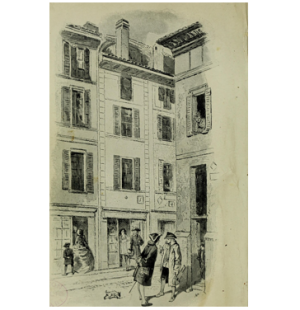
Giuseppe Giovanni Battista Guarneri was born on November 25, 1666, in Cremona, the youngest son of Andrea Guarneri and Anna Maria Orcelli. His birthplace, the “Casa Orcelli-Guarneri,” had originally belonged to his grandparents, but after his parents’ marriage, they both moved in. It was a modest home with a workshop in the city center. The Guarneri family was certainly not wealthy; Giuseppe’s father had had to take out a loan to buy his in-laws’ house and had rented out part of it. It was conveniently located—right in the heart of the city and in the shadow of St. Dominico Church. In the 1652 census, the house is still listed as number 6; later that year, Andrea named his workshop “Sub Sanctae Teresiae,” a name that also appeared on his labels starting in 1653. Hill views this name as a sign of the Guarneris’ devotion to Saint Teresa of Ávila, while historians see the popularity of this Spanish saint as a concession to the Spanish rulers who held power in northern Italy.
Shortly after his marriage, his father had left the workshop of Nicolò Amati—from whom he had learned the craft—and started his own workshop. He had worked for Amati almost continuously for nearly fifteen years, starting in 1641, and was very familiar with his methods. Consequently, the first instruments he built in his own workshop differed very little from those of Amati.
Andrea Guarneri had connections with musicians associated with the influential Marquis Giovanni Battista Ariberti, who was the patron of Cremona’s main theater. Through him, he had met Anna Maria Orcelli, whom he married in 1652. When Giuseppe was born in 1666, Ariberti served as a witness and became Giuseppe’s godfather. His older brother Pietro was 11 years old at the time and was already helping out in the workshop.
It is likely that Andrea had no permanent employees, at most a few apprentices. Hill sees enough evidence to conclude that the Grancino brothers must have been Andrea Guarneri’s apprentices between 1670 and 1680. Giuseppe, who had already received his first lessons from his father Andrea in their own workshop around the age of 11, was also acquainted with the Grancinos, as was his brother Pietro. When Pietro married in 1677, he continued to work with his father and brother for another two years, but then left for Mantua to establish himself there as a violin maker.
Guarneri likely didn’t have enough commissions for a new employee; competition in Cremona had become far too fierce for that. Girolamo Amati had taken over his father Nicolò’s workshop and proved to be an ambitious luthier, but their true competitor was their fellow townsman Antonio Stradivari. With his instruments, which excelled in beauty and power, he quickly conquered a large part of Europe. Buoyed by his success, Stradivari wanted to expand and moved to a larger building located four houses away from Casa Guarneri. For Giuseppe’s brother Pietro, Stradivari’s growing influence in Cremona was the deciding factor in his decision to leave.
Cremona had long been a household name among musicians in Europe. Claudio Monteverdi, who was born in Cremona, had brought the city to their attention. His music had made its way into the most important courts and musical centers in Europe. Music ensembles everywhere were eager to perform his works. This demanded great virtuosity from the musicians. Such virtuosity could only be achieved with the finest instruments available. Monteverdi must have referred musicians to the instrument makers in his hometown for these instruments, for Amati and Guarneri of Cremona became household names among most musicians. The Amati violin had become the standard, but the instruments made by his pupil Andrea Guarneri were hardly inferior in tone.
As early as around 1684, Giuseppe’s influence can be seen in his father’s instruments, first in the scrolls and later in the rest as well. Shortly thereafter, his father’s long-standing health problems began to take their toll, and Giuseppe took over the business. Andrea drew up his first will in 1685, in which he bequeathed half of his possessions to Giuseppe. His other son, Pietro, receives only a quarter. Andrea explains that he is favoring Giuseppe for his “loyal service and companionship.” From that point on, Giuseppe begins to play an increasingly important role in the business.
The earliest known instruments made entirely by Giuseppe date from 1689. He was 23 at the time and, judging by the design, still very much in the process of developing his craft. However, he already seems to have his own ideas about how an instrument should be finished; they are slightly different from his father’s: lighter in color and highly arched. He sometimes leaves the tool marks visible. They still bear his father’s label, though.
In 1690, he married Barbara Franchi, with whom he continued to live in the Casa-Guarneri on Piazza San Domenico after their wedding. A year later, their first child was born but died just a few days later. The same early death also befell their other two daughters. Giuseppe felt an even greater sense of responsibility for his family after his father drew up a second will in which he bequeathed the workshop to him as a token of gratitude for “his support and obedience, which had never failed him and now sustained him in his old age.” To help cover the costs of his growing household, Giuseppe occasionally worked as a violinist.
There were only four families in Cremona who were involved in violin making: the Amatis, the Ruggieris, the Stradivaris, and the Guarneris. In Cremona’s rather strict hierarchy, Stradivari was the foremost, not least because of his enormous success, but the Amati family continued to exert the greatest influence for a long time, as most others modeled their work after them. Giuseppe Guarneri, too, continued to do so for a long time.
Northern Italy had proven receptive to the ideas of the Enlightenment that the French rulers had brought with them. Music was no longer intended exclusively for the court, but also for the common people. A new musical renaissance flourished in Venice, Milan, and Naples. A new generation of professional musicians sought a more powerful, richer sound—a straightforward instrument without the embellishments that Stradivari was capable of crafting. This movement found what it was looking for in Guarneri, a choice that suited their often meager pay.
In 1695, Giuseppe’s mother died, after which his wife became the “mater familias” of the household. A few months later, Giuseppe and Barbara’s fourth child was born. In honor of his uncle, who had left for Mantua, they named him Pietro.
Andrea’s health deteriorated so severely in 1698 that Pietro Guarneri returned from Mantua to Cremona. That year, Andrea drew up his final will, in which he bequeathed his house, workshop, supplies, and all his tools to Giuseppe; Pietro was to receive a payment of 600 lire after his death, an amount equivalent to the sale value of 300 violins.
On the day the will was signed, Barbara gave birth to their fourth son, Giuseppe Bartolomeo del Gesù. His uncle Pietro signed the birth certificate and became his godfather. Andrea died in late 1698. After the funeral, Pietro returned to Mantua, and Giuseppe was left alone. Andrea had left behind nothing but debts, forcing Giuseppe to take out a loan to pay Pietro his share of the inheritance.
Trade around Cremona had been virtually at a standstill for some time due to skirmishes between Austrian and French armies. In the winter of 1701, the city was stormed by Austrian troops. The goal of this invading force was to capture the headquarters of the French legion stationed in Cremona. With 4,000 soldiers, the army marched into the city. In the battle that followed, more than 3,000 people were killed. During the retreat, the city and its surroundings were plundered by fleeing soldiers.
Stradivari had built an empire with influential buyers from all over Europe and was largely unaffected by the recurring outbreaks of violence when it came to exports, but sales for most of the other luthiers in Cremona declined sharply. It took nearly ten more years for everyday life to recover from the aftermath.
It soon became clear to Giuseppe that the old Amati model he was still following had run its course in Europe. Around 1705, he introduced a new design with a wider top and a narrower middle section that was strikingly angular in shape. Although this became his most successful model, it did not earn him enough to support his family. Cremona began to lose its dominance in violin making due to the emergence of new centers both within and outside Italy. To keep up with his competitors, he took out a large loan of 1,000 lire in 1715 from his neighbor, the blacksmith Leonardo Rolla. With that money, he purchased wood of much higher quality than he had been using at the time. He used it to build a number of excellent violins and cellos, but he would never repay the loan.
By then, he had trained both of his sons to the point where they could help out in the workshop. In 1715, Pietro was still registered at his father’s address, but two years later he wanted to leave. According to Hill, there were too many differences of opinion between him and his father, with whom he lived under the same roof. He continued to work in Cremona for a few more years, where he presumably still assisted his father, but also earned a living as a violinist. Around 1724, he decided to move to Venice—by far the most vibrant city in northern Italy in terms of music—to resume his career as a violin maker there. Giuseppe “filius Andreae” continued to run the workshop on his own, with the help of his youngest son.
This collaboration with him, too, did not last long. Giuseppe Bartolomeo del Gesù married Caterina Rota, the daughter of a Viennese soldier, in 1722 and left Cremona. For six years, their names do not appear in the local archives. During their absence, his father rented out part of the house. It wasn’t until 1729 that they reappeared in Cremona. By then, Giuseppe “Filius Andrea” had fallen ill and had to be admitted to the hospital.
By the end of 1731, he was back on his feet, but could barely work anymore. He did collaborate with Giuseppe del Gesù and finished a few instruments on which he still affixed his original label “filius Andreae,” but he had to make way for his son, who was forging his own path. From that year on, the roles were reversed; “Filius Andrea” assisted his son, primarily by carving the scrolls. From then on, the instruments coming out of the Guarneri workshop bore the label of Bartolomeo Giuseppe del Gesù.
In 1737, his greatest rival, Antonio Stradivari, died, and thirteen days later, his wife, Barbara Franchi, also passed away. She was buried in the family tomb in San Domenico, next to the same church where Stradivari was laid to rest. To pay for her funeral, he sold part of his house and took out another loan. A more stark contrast to his recently deceased neighbor—about whom the saying in Cremona went, “As rich as Stradivari”—could not have been imagined at that moment. In an effort to help his son build his own business independently, he borrowed another large sum of money two years later. He died in 1740. Burdened with heavy debts, his sons could no longer afford the cost of his burial in the family tomb, and he was buried somewhere outside the city.
The life of Giuseppe Guarneri “filius Andreae” ended anonymously, but his name is linked to the most crucial period in the history of violin making. He served as the link between the style of Nicolò Amati and that of his son, Bartolomeo Giuseppe Guarneri “del Gesù,” who would later be recognized as one of the greatest Cremonese luthiers.
Andrea and Giuseppe “filius Andreae” primarily built instruments for musicians, tailored to their musical practice and modest budgets. A strong emphasis on refinement was the exception. But occasionally, instruments emerged that can be counted among the best of the Cremonese luthiers. Hill identifies about twenty such examples in Andrea’s work between 1638 and 1694. As their neighbor Stradivari began producing more refined instruments, Giuseppe was inspired by him and improved his work somewhat. According to Hill, he was a better craftsman than his father, but due to the wide variation in the quality of his work, it took until the mid-nineteenth century for his value to be fully recognized.
Until Andrea’s death, Giuseppe followed the pattern he had inherited from him; it was still entirely based on Amati’s. In the years following Andrea’s death, not much changed; the only difference was that he no longer made his father’s small model or Amati’s “large pattern.”
By 1692, Giuseppe had already built three cellos that represented the first successful attempts to break away from Nicolò Amati’s ideas. He also designed a smaller model that proved very successful. With this instrument, he was about 10 years ahead of Antonio Stradivari. After 1700, he resumed making these cellos. He also built several excellent violas.
Over the next ten years, he was influenced by others; he even adopted a “long-pattern” Stradivari violin and sought to collaborate with his brother Pietro “of Mantua.” The dimensions, circumference, and edge inlays of their violins began to resemble one another more and more. Hill and Hargrave view this as the result of a better relationship between the two brothers.
By around 1700, the old Amati model had fallen out of favor in Europe. Shortly thereafter, Giuseppe “filius Andrea” introduced a new design with a wider upper section and a narrower middle section that was strikingly angular in shape. Within Cremona, his design was emulated by Carlo Bergonzi, Enrico Ceruti, and several other fellow townspeople. By around 1715, in order to further distinguish himself from his contemporaries, he had developed a distinctive model of his own that he would continue to make until his death; it was elegant, with sound holes that featured a characteristic kink at the top.
In later years, many of the “filius Andreae” instruments were relabeled as Amatis or underwent minor alterations so that they could be sold as Bergonzis.
Giuseppe’s first label dates from 1690. He writes, “Joseph Guarnerius filius Andrea fecit Cremonae, sub titulo S, 1690.” He would use this, with a couple of variations in the text, until 1701; after that, he added “Teresiae” or “Theresia”—a phrase that had appeared on his father’s labels as early as 1653 and that he would continue to use for the rest of his life. Four more variants followed, but all of them closely resembled Andrea’s.
Giuseppe “filius Andreae” did not establish a “school” during his lifetime, as Stradivari did. Neither his brilliant but somewhat uncouth son “del Gesù” nor Pietro, who worked with greater precision and could effortlessly hold his own in sophisticated Venice, followed their father’s example. With the exception of a few examples by Ceruti, his work was not directly emulated by others. It was not until much later that the power of his individuality was recognized, and many began to build violins following his example.
The cello that the Musical Instrument Fund has in its collection may be one of a series of instruments for which he took out a loan in 1715 in order to purchase better wood.
Hargrave R. G., 2011, The Working Methods of Guarneri and their Influence upon his Stylistic Development.
Beare C., 1995, Guarneri del Gesu's Place in Cremonese Violin-making, Cremona.
Jalovec, K., 1957, Italian Violin Makers, Prague.
Vannes, R., 1981, “Universal Dictionary of Instrument Makers,” Brussels.
The Strad; In Focus 2013; John Dilworth.
Tarisio; the Cozio archive, bezocht in 2021.
Cremona State Archives, visited in 2021.