Instrument

violin
Gand & Bernardel (maison)
Paris,
1891
played by
Violetta Adamova
Violetta Adamova

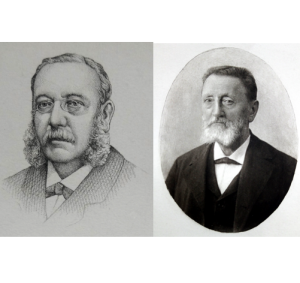
Just before a law went into effect in 1886 mandating that all of Napoleon’s descendants be expelled from France, the entire Bonaparte family left the country. They took only the bare essentials with them. The two Guarneri violins and a few other instruments from the family collection were left behind. These were purchased by Eugène Gand on behalf of the firm Gand & Bernardel. It was one of the first transactions following Ernest Bernardel’s departure. By acquiring these instruments, they demonstrated that their position had remained unchanged following the departure of their brother and partner. For stringed instruments, Gand & Bernardel was still the leading “Maison” in Paris.
The firm had existed since 1866 under the name Gand & Bernardel Frères, but changed its name after Ernest Bernardel retired, exactly twenty years after he had founded the company together with his brother and Eugène Gand. After his departure, Charles Eugène Gand and Gustave Bernardel continued the business together. They simply removed the word “Frères” from the company name.
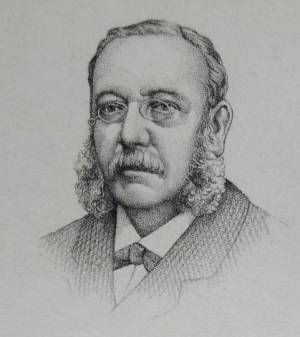
Eugène Gand. Photo courtesy of Gaël Français.
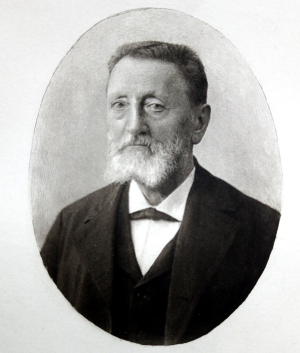
Gustave Bernardel. Photo courtesy of Gaël Français.
Even before they became neighbors across the street on Rue Croix-des-Petits-Champs in Paris, the Gand and Bernardel families had maintained close ties; both family patriarchs had been trained by Nicolas Lupot at nearly the same time. Gand came from a distinguished family in Versailles, while Bernardel was of somewhat more modest origins. Lupot had found a suitable match for his daughter in Charles Eugène Gand and saw in him a promising son-in-law who could later take over his business.
Gand and Bernardel had joined forces in 1866, but remained on Rue Croix-des-Petits-Champs. Over the years, both families had built up an impressive business that not only crafted high-quality stringed instruments and bows but also boasted an impressive collection of antique Cremonese master instruments. As the crowning achievement of their careers, they had been commissioned to build all the instruments for the orchestra of the Palais du Trocadéro.

1889 Paris World's Fair
The government of the Third Republic wanted to do what Napoleon III had done in 1867: show the world how far the economy, the arts, and science had come in France. And just as under the “Emperor of All the French,” the World’s Fair in Paris offered the best opportunity to do so.
The 1889 World’s Fair was dedicated to the centennial of the French Revolution, a theme that was deeply unpopular with virtually all of Europe’s monarchies; in protest, they chose not to attend. Consequently, no German or English violin makers participated in that year’s World’s Fair. With 60,000 international participants, the “Exposition Universelle” was no larger than the one in 1867, in which Gand & Bernardel Frères had participated for the first time, but the exhibition did attract 32.3 million visitors.
Gand & Bernardel’s self-confidence was so great that they submitted four violins, two violas, several cellos, four- and five-string double basses, and a number of bows, even though they knew they couldn’t win any prizes for them. Their entry would remain hors concours because Eugène Gand was on the jury.
Charles Eugène Gand was now at the height of his career. He was internationally renowned as a violin expert and handled purchasing and sales, but nevertheless spent several hours each day working in the workshop. Bernardel likely played the largest role in managing the workshops. The firm was the leading one in its field in Paris.
"One of the foremost French violin makers of our time" (Antoine Vidal on C.E. Gand)
Gand died in 1892 after a brief illness. During the service held on the occasion of his funeral, the entire Opera orchestra performed. The ceremony was covered by most Parisian newspapers. Even in England, his death received attention. There, Alfred Hill, who had known him well personally, wrote praisefully of him: “Although Eugène Gand was involved in the day-to-day operations of the business, he rarely missed a day at his workbench and varnished most of the instruments himself". Eugène Gand had made Maison Gand & Bernardel the most important in France. Three years earlier, Antoine Vidal had called him “one of the foremost French violin makers of our time” .
Since Charles Eugene Gand’s only son had no interest in the trade, Bernardel continued on his own, still at the same address where his great-grandfather had started. After Gand’s death, the trade in old master instruments took on a less prominent role within the firm. Bernardel focused primarily on the crafting of the instruments. The firm that Nicolas Lupot had founded in 1806 at the same location—and which the three of them had continued to run together since 1866—Bernardel had to keep running on his own after Eugène Gand’s death.
During their six years in business, some 150 stringed instruments and bows came out of their workshops. Most were of refined quality and built according to the French tradition. There was no single, recognizable Gand & Bernardel model, but all their instruments were based on the great Cremonese violin makers of the previous century. They usually used a light brown to light red varnish, though a deeper red finish was also available. The distinctive red color used by Lupot was also available, but only by special order.
Gand & Bernardel was also known for its bows; the models created by the finest makers of the time—such as Charles Peccatte, Vigneron père, Pierre Simon, Joseph Henry, Claude Thomassin, and François Nicolas Voirin—had served as their inspiration. In previous years, they had supplied their bows to the firm, often without being employed by it, but their work influenced production in the workshop to such an extent that the differences between a workshop bow and the original are not always easy to discern. All bows sold by the company bore the Gand & Bernardel brand mark, regardless of who had made the bow.
The Maison Gand & Bernardel label stated that they were “Luthiers du Conservatoire de Musique” and the builders of the instruments for the Palais du Trocadéro.
The violin in the Music Instrument Fund's collection dates from 1891. It is likely one of the last instruments that Eugène Gand finished himself.
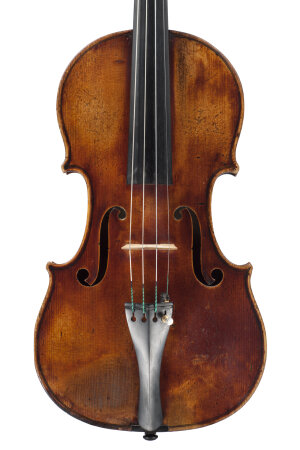
The Musical Instrument Fund Collection
Milliot, S., and Perrin, N. 2017, European Stringed Instrument Making Day. Paris.
Thöne J, 2008, Italian & French Violin Makers, Dubai.
Carlson B., Schmitt J. F., Moroder I., Leonhard F., 2007, Italian & French Violin Makers, Keulen.
Vannes, R., 1999, *Universal Dictionary of Instrument Makers*, Spa.
Millant, R., 1979, J-B Vuillaume: His Life and Work. Hill & Sons, London
Henley W., 1959 Universal Dictionary of Violin and Bow Makers. Amati Publications. London.
Jacquot, A., 1912, La Lutherie Lorraine et Française, Paris.
Tarisio; the Cozio archives, accessed in 2020.
Geneanet, accessed in 2020.
Archives Nationales de France, accessed in 2020.
Archives of the Musée de la Musique, accessed in 2020.

