Instrument

violin bow
Eugène Nicolas Sartory
Paris,
± 1920
played by
Frederieke Saeijs
Frederieke Saeijs

*1871 , Mirecourt †1946 , Parijs
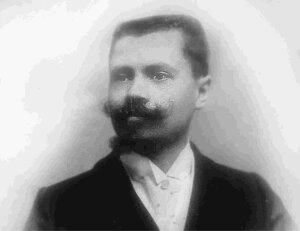
Peccatte followed in the tradition of the great French bow makers. It was a mysterious blend of craftsmanship, a spirit of experimentation, and a drive for innovation that had begun with Tourte and had flourished over the course of generations. After honing his skills at Vuillaume and Voirin, Peccatte carried on that tradition. His bows had a distinct character of their own, yet still bore a resemblance to those of François Tourte. Later, his bows took on a somewhat lighter design. It was during this period that Eugène Sartory became his apprentice. Eugène was a quick learner, proved to have a steady hand and the ability to work with precision, but Peccatte and Sartory did not get along very well.
Within a year, he moved on to a new mentor: Alfred (père) Lamy, who was also based in Paris. This bow maker, too, owed much of his knowledge to the legendary François Nicolas Voirin. Lamy quickly taught and inspired Sartory to develop his own style and design. When Eugène Sartory was eighteen, he felt skilled enough to open his own workshop. A year later, he married the daughter of the violin maker Jacquet-Gand. Together, they had two daughters.
In 1902, he moved his studio to the neighborhood where the old conservatory was also located. As early as 1900, he had sent several bows to the Exposition Universelle in Paris. The exhibition was held as a tribute to the achievements of the previous century, but above all as a hopeful look toward the dawning new era. Although he did not win first prize there, he did receive a medal along with an exceptionally high commendation for his entry. This likely brought him many customers; his new location became a great success.
Ten years later, he moved again; not to the trendy area around the new conservatory, but to a large, stately building in his own neighborhood. There, he received his clients on the fourth floor. Eugène Sartory proved to be not only an outstanding craftsman but also a forward-thinking entrepreneur. His business was doing so well that he opened a second location in the suburbs of Paris and had to call on others for help. Some worked in Sartory’s workshop, while others, such as Louis Morizot, supplied him with bows. However, all bows had to meet his strict standards regarding design, quality, and finish. Reportedly, no bow left his workshop without having been personally inspected, weighed, and evaluated by him. During that time, his reputation grew far beyond the borders of France.
In 1914, Eugène Sartory was called up for military service. Upon his return, he found that the economic situation was dire and competition was fierce. He decided to try his hand at selling his bows outside of Europe.
In 1921, he himself left for America with a shipment of bows. There, he discovered that his name appeared on a shipment of bows that had never even passed through his workshop. He lost the lawsuit he filed there due to inadequate American legislation. For that reason, he provided many of the bows he later exported with a certificate. It is suspected that he sometimes branded his name not only in the usual place but also beneath the winding—which could indicate yet another attempt to prevent counterfeiting.
Charles Bazin and Louis Morizot would follow him on his export venture to America shortly thereafter. His first wife died in 1933. Two years later, he remarried his niece, Emilie Josephine Augustine Sartory. Experts note a final shift in his work around that time: his bows gradually became sturdier, and he began making octagonal bows. Eugène Sartory died in Paris at the age of 75, celebrated and mourned.
Experts still see the influence of Lamy and Viorin in Sartory’s early bows: light, elegant, and refined. Over time, Sartory developed his own, slightly more robust model. He organized his workshop so that his employees could produce the bows almost as if they were mass-produced, without compromising the quality he demanded. Sartory was the first to mark the frogs of his bows with a “Paris Eye.”
The dimensions of these pieces are specified in detail, which can also be seen as an attempt to make counterfeiting more difficult. He continued to produce the model he developed until around 1930. After that, his work gradually became slightly more robust. Eugène Sartory worked for a large number of workshops, including those of Nestor Audinot, Paul Blanchard, Joseph Hel, Émile Germain, Sylvestre & Maucotel, and Simoutre. One of his most famous students was Jules Fétique.
Eugène Sartory’s bows are highly prized for their excellent balance and resilience. Contemporary researchers have discovered that much of the pernambuco wood Sartory selected had a slightly different grain structure than what was customary at the time. It was no longer dense and dark, but had a slightly looser grain and was lighter in color. When measured using the latest techniques, the quality of that wood has been found to be exceptional. This provided scientific proof of his intuitive craftsmanship.
His work has received numerous awards and accolades, including at exhibitions in Brussels, Paris, London, Liège, and Milan.
Geneanet, accessed in 2019.
Archives Nationales de France, accessed in 2019.
Fontainebleau-Paris Archives, accessed in 2019.
Mesdemarches.culture.france, accessed in 2019.
Jacquot A., 1998, Dominique Sartory, Paris.
Haine, M., 2013, “Trademarks of Instrument Makers Registered from 1860 to 1919.”
Millant, B., Raffin, J.F., 2000, *L'Archet: French Bowmakers, 1750–1950*. Paris.
Tarisio, Cozio Digital Archive, accessed in 2019.
Vatelot, E., 1976, *Les Archets Français*. Nancy.


