
Time for a
new sound:
Pieter de Koe
returns his Cuypers
cello
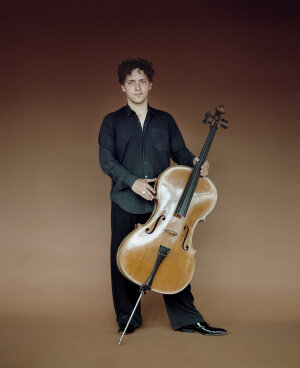
The instruments in the collection of the Musical Instrument Fund often bear the mark of many musicians’ passion, as they come and go—always in search of the sound that suits them best. Together, they grow with their instrument, sometimes even literally, as the years fly by. This creates a close bond. Yet at some point, they may be ready to take the next step. Such is the case with cellist Pieter de Koe, who for years has played an 18th-century Cuypers from our collection.
Although Pieter still has a soft spot for this cello, he felt it was time to pass the instrument on to a new player. He himself is continuing his musical journey with a Rombouts—his so-called “pirate cello.” In this short interview, you’ll find out why.
Can you look back on your first encounter with the fund?
“That was really a very long time ago. I was twelve, still playing a 3/4-size cello, and visited Het Muziekinstrumentenfonds for the first time. What I remember most about that visit is how warm and welcoming everything felt. That hospitality—and their willingness to work with me—has actually never changed. From the very first moment, I felt that Het Muziekinstrumentenfonds was truly there for me.”
How did the instruments you borrowed influence your musical development and taste?
“I’ve played quite a few instruments and bows over the years. My first Jorio 3/4 cello already sounded so special—that made a deep impression on me as a young player. Later, I played the Marino Capicchioni, among others, and eventually the Cuypers cello, which has been my musical home for a long time.
The transition from the Capicchioni to the Cuypers was a big one. It took some time to make it agile and flexible, but once it clicked, I developed a deep love for its sound. That clarity and brilliance—I rarely find that anywhere else. And another special thing: it comes from The Hague, where I live. So suddenly I became an ambassador for a piece of Dutch violin-making history that really speaks to me anyway.'


Why were you looking for a new instrument, and how did you find it?
“Still, as time went on, I began to long for an instrument with a bit more spaciousness and depth in its sound. That search eventually led me to the 1710 Pieter Rombouts cello—an incredible instrument.”
I sometimes call it a “pirate cello.” It’s anything but symmetrical, with a rounded body and a back that could be a painting in its own right. The cello clearly carries its history with it, and its sound rumbles. There’s something raw, something alive in it, which I enjoy anew every day. On top of that, it’s carved slightly smaller, which makes it very maneuverable for me.
"It has always been a dream of mine to own an instrument from the Dutch school—and the fact that I now have the opportunity to do so, with such a distinctive piece, feels like an enormous privilege."
Will you miss the Cuypers cello?
“Absolutely. That clear, proud tone—it’s the kind of sound that grows with you, isn’t it? The Cuypers carried me through an important period in my musical life. But at the same time, it feels good that a new player can fall in love with that instrument all over again. That’s how it should be.”

What is your fondest memory of an event organized by the foundation?
"Oh, that's a tough choice. Two things come to mind right away:
– The promotional video for Natuurmonumenten in 2017. Running through forests and across estates with my cello at Hackfort Castle. I looked up the trailer again recently while answering these questions—it’s been viewed more than 200,000 times, haha.
– The Cuypers Project at the Beurs van Berlage, where all the Cuypers cellos from the Musical Instrument Fund were brought together. “It was so special to hear those instruments side by side and to play them all myself for a moment. That was truly a treat.”'
Do you already have any exciting projects lined up with your new instrument?
“Yes! I just finished recording my new solo CD, featuring works by Debussy and Britten. For the Debussy pieces, we used a grand piano from 1865, and together with the Rombouts, we created a sonic world that never ceases to amaze me. This recording is also part of the Leporello project I’m working on: a series of physical art editions that bring together music, imagery, and craftsmanship. It’s definitely worth exploring if you want to hear the Rombouts.
In addition, the Rombouts has found its place in my string quartet, the Animato Quartet. We just recorded our debut CD, and it will be featured on that album next November. It’s a wonderful match—even in a chamber music setting, the instrument feels like a kind of musical anchor.'
What advice would you give to musicians who are looking for their own instrument?
“If you really fall in love with an instrument—go for it. But also be honest with yourself. What are you looking for as a player? The Rombouts, for example, has a distinct character—great for me, but someone else might prefer something more even or stable. And don’t forget: the search is part of the fun—and there’s no such thing as the perfect instrument.”
Moving forward with a sense of fulfillment
We are grateful to Pieter for his dedication to the fund during his years on loan. We wish him much new inspiration and growth, and hope that the Rombouts will suit him even better than the Cuypers. Hopefully, that cello will soon bring joy to a new talent. We’ll keep you posted.