Talent

Matthijs Koene
plays a
pan flute
from Flentrop Orgelbouw
from Flentrop Orgelbouw
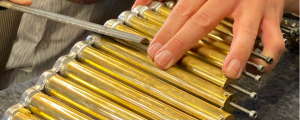
There’s a lot that goes into developing a completely new instrument, such as the “Flentrop” metal pan flute. It all starts, of course, with musician Matthijs Koene and his ambitious initiative, driven by an unprecedented determination to find the ideal sound that the new pan flute must produce. And then there’s the craftsmanship of the Flentrop team—organ builders from Zaandam—which is crucial because every tiny detail in the materials, construction, finish, and intonation affects the sound.
Of course, all of these aspects involve costs, so an appropriate budget is needed—in this case, provided by a single private donor. The fund is responsible for coordinating all of this; fortunately, we can draw on the knowledge and experience we’ve gained from previous construction projects.
One thing I haven’t mentioned yet is the time factor. That’s a tricky one, especially during the COVID-19 pandemic. I heard myself say in one of the filmed reports that I expected we’d be able to present the final result before the summer of 2021, but that hasn’t proven feasible. We need to give this process the time it requires, and the final steps, in particular, demand that.
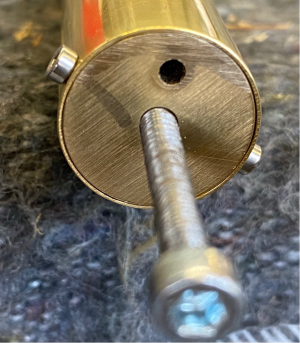
The Flentrop metal pan flute is already working great. We’ve made tremendous progress and overcome all sorts of hurdles, such as eliminating minor leaks in the solder joints, perfecting the tuning mechanism, and soldering together the 100% tin heads (a masterpiece of craftsmanship at the highest level). The increased weight compared to the wooden heads of Koene’s current pan flute turns out to be much less of an issue than expected. With that, we may well have cleared the most important hurdle. The Flentrop pan flute already undeniably has a higher-quality sound than Koene’s “Preda.”
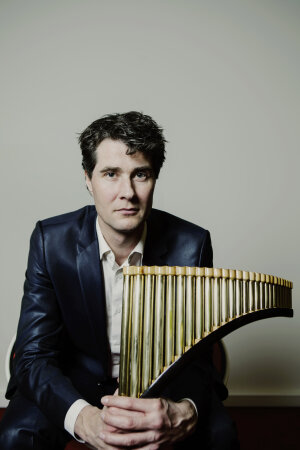
Still, we’re not quite there yet. There’s one more step to take, particularly with regard to the response (the immediacy with which the tone is produced) and the sound power. The Flentrop currently seems to have slightly less of that than the Preda. It’s a matter of finding the right balance, so that the improvement in timbre (clearly audible in the Flentrop) doesn’t come at the expense of the tone’s immediacy and power. It is precisely these last—seemingly small—steps that require a great deal of attention and must be taken very carefully, because one step too far could mean that a completely new pipe must be built.
As Erik Winkel of Flentrop so beautifully puts it: “The most beautiful flowers grow on the edge of the abyss.” This speaks to both the need and the willingness to push the boundaries—even if that means crossing them. So, extra time also means a better chance of achieving the best possible result—and that’s what we’re aiming for!