Almost Ready to Play:
Bows by
Ter Berg (1950–1983)
Leave the Archives
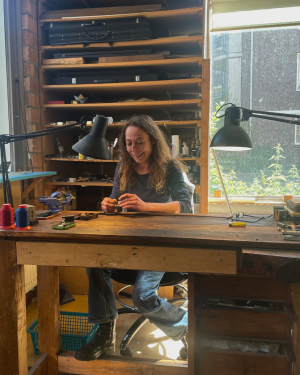
Did you know that the ferrule—the part of a bow that holds the hair in place—is sometimes made from materials such as sea turtle shell and ivory? This makes international travel very difficult for musicians. That is why we are having the ferrules of special bows replaced. Currently, bow maker Simone Waterman is replicating the frogs of two cello bows crafted by Daniel ter Berg (1950–1983).
Daniel ter Berg
Before bow maker Daniel ter Berg could open his own workshop, he passed away at a young age.
During his short life of 33 years, Daniel ter Berg crafted a number of excellent bows, both modern and Baroque. The style and quality of his early work were still somewhat inconsistent; he was unable to develop a definitive personal style. Particularly in his final years, he fitted some bows with a sea turtle shell frog set in a gold mount. Bowmakers often used these more exclusive materials when they were truly proud of the result or when the customer requested it.
Time for a loan
After Daniel’s death, the Musical Instrument Fund received a large portion of the bows from his estate from his heirs. We do not lend some of these bows to musicians because it is too risky to travel with protected materials. But they are too beautiful to leave sitting in a closet.
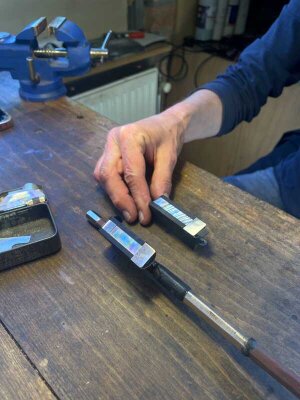
To ensure that these bows can continue to be loaned out without concern in the future, we have already had a large number of tortoiseshell bow cases replaced with ebony ones in recent years. Two Ter Berg cello bows are currently with Simone Waterman to be fitted with custom-made ebony bow tips. The original bow tips are being preserved in the archive as reference material for future research.
From Turtle Shell to Ebony
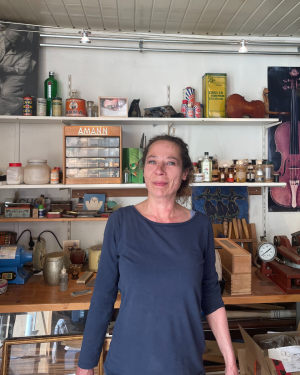
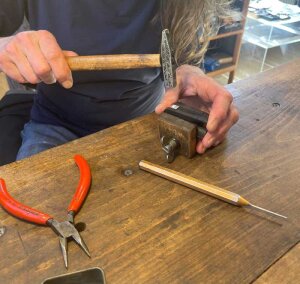
Craftswoman Simone Waterman meticulously creates a replica of the original shoe, but this time using ebony and silver. Copying and replacing such a small part can take as many as 4 to 5 workdays! To ensure that the playing characteristics remain as similar as possible, it’s primarily a matter of precision work to shape the curve of the shoe in the same way and maintain the same weight.
According to Simone, there is another advantage to replacing the sole. Compared to ebony, tortoiseshell is a less durable material. It is common for the tongue of a tortoiseshell sole—the part that the ring wraps around—to break off. Ebony reduces this risk.
Donate to this project
The copies are almost ready. Would you like to help make this project a success? Your help is greatly appreciated. Thank you in advance!
Check out our projects