Instrument

violin
Spirito Sorzana (Sorsana)
Cuneo,
1736
played by
Olivia Scheepers
Olivia Scheepers

*± 1692 , Bernezzo †± 1745 , Bernezzo
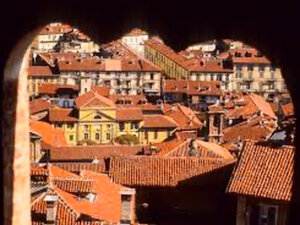
The name Spirito Sorsana does not appear in the archives. Spirito Sorzana does, however. On the labels of his violins, he wrote his last name as “Sorfana,” in which the “f” was pronounced as a “z” in the seventeenth century but was later read as an “s.” His family name is therefore Sorzana.
Research into historical sources shows that the surname Sorzana was found only in the village of Bernezzo—located in the southern corner of Piedmont—at that time, and nowhere else. Not even in Cuneo, where he built his instruments. Spirito or Spirita was a common first name in Bernezzo.
The violin maker Spirito Sorzana was presumably born in 1692 as Fiorenzo Sorzana, the son of Spirito Sorzana. The latter was born in 1645 and had six children, of whom Fiorenzo was the youngest, a late-born child. After his father’s death in 1710, he must have adopted his father’s first name, Spirito. Like his father, Fiorenzo Sorzana was born in Bernezzo and died there in 1745. He had six children, two of whom he also named Spirito.
The southernmost corner of Piedmont was not known as a region where prominent violin makers worked. Only Gioffredo Cappa spent his final days there. It was long assumed that Sorzana was his student, but their work does not resemble each other. Rattray examined a 1731 violin by Sorzana that does show some resemblance to those of Gioffredo Cappa, but that was a coincidence, since Cappa had already been dead for fourteen years by then. Blot maintains that the elderly Cappa, at most, encouraged Sorzana to become a violin maker. Cappa worked in Saluzzo around 1700 and died there in 1717; Sorzana was almost certainly born in Bernezzo. Both villages were within walking distance of each other. There were no other violin makers of any significance in the wider area; they were all in Turin. It is therefore plausible that Spirito Sorzana went to Turin to learn his craft.
In addition to a few skilled French luthiers, there were two other violin makers working there whose work Sorzana’s does indeed closely resemble: Enrico Cattenar and Giovanni Francesco Celoniato. The latter had good connections with the Court of Savoy and was familiar with the monarch’s musical preferences. Blot and Kass note that all makers from the Turin area were similarly influenced by French and German makers who had come to Piedmont. Furthermore, they see sufficient similarities between the work of Spirito Sorzana and that of these Turin-based makers to conclude that he must have spent at least his apprenticeship years in that city.
Turin was the capital of Piedmont and also the seat of the court of the ruling House of Savoy. The “Cappella Regia” was the driving force behind the city’s musical culture. The House of Savoy sought out the best musicians and paid the orchestra members and soloists well. Around 1700, the orchestra underwent a reorganization, became the “Cappella del Duomo,” and was regarded as one of the best in Europe. Its violinists excelled in virtuosity. Enrico Cattenar and Giovanni Francesco Celoniato built instruments specifically for the orchestra. Compared to Venice and other major cities, Turin’s musical culture remained conservative. Modern string instruments, such as those already in use elsewhere, did not emerge in Turin until around the turn of the century.
It was during this period of major musical changes that Spirito Sorzana began his career; highly arched string instruments gave way to flatter models inspired by Antonio Stradivari of Cremona. The changing musical style called for different instruments and provided violin makers with plenty of work.
In his book, Rattray states that Spirito Sorzana remained in Turin for some time as an independent luthier, but there are no known instruments by Sorzana with a label indicating this. Kass and Dilworth therefore assume that he went directly to Cuneo, where he established himself as a violin maker.
Cuneo was a fortified town 45 km south of Turin and just a stone’s throw from Sorzana’s hometown. It had a reputation for having withstood seven battles fought in the area surrounding the town and had been richly rewarded for this by the King of Savoy. The population was prosperous, French-oriented, and boasted a remarkably rich musical culture. It had easily accessible passes to Nice, which further strengthened France’s influence. However, Cuneo did not have enough residents for Sorzana to make a living solely from violin making, and like most violin makers of that time, he most likely also practiced another trade. The Cuneo archives, however, do not provide a definitive answer on this matter.
His earliest known violin dates from 1720, and based on the label, he built the instrument in Cuneo. In the twenty years that followed, he built just under twenty violins, all in that city. No violas or cellos made by him are known to exist. The last violin we know of that he made is from 1740.
A violin by Sorzana was found in the collection of Cozio de Salabue, the 18th-century connoisseur and collector of valuable or unusual stringed instruments, after his death. This was remarkable, given that he had previously been forced to sell many instruments due to financial difficulties. He had, however, kept the Sorzana.
In the seventeenth century, many French violin makers had come to the southwestern part of Piedmont in northern Italy after the French king had taken power. Over the years, the influence of the French violin makers grew, while that of other makers diminished. Sorzana’s fellow regional makers, such as Enrico Cattenar, Giovanni Francesco Celoniato, and, to a lesser extent, Goffredo Cappa, were examples of this. Little of their work has survived, but their earliest instruments reveal an old Flemish-French construction system. Two key features of this system were that the violin’s rim was glued into grooves in the back plate and that the neck and upper block of the violin were made from a single piece. This method remained the standard for violin making in Turin long after Sorzana’s time.
In his early years, Spirito Sorzana also built his instruments in this manner. Around 1730, he appeared to come under the influence of violin makers who followed Stradivari’s style more closely, and he began building his instruments in the manner customary in Cremona, though with a freer and less rigid form. The 1731 violin, thoroughly researched and described by David Rattray, closely resembles the Stradivari model, but is more coarsely built and less finely finished than was customary in Cremona; the chisel and scraper marks are clearly visible beneath the varnish. The grain has been damaged in places by bone tools. The f-holes, however, are sharply cut.
All of Sorzana’s violins are very regular in shape and well-proportioned, with fairly short corners and a full arch that tapers into a flat, wide rim. The f-holes are open and Amati-like. They are robust and quite distinctive; the scroll, too, is reminiscent of early Turin designs, but more idiosyncratic.
Violin makers in Piedmont often used wood that grew in the immediate vicinity. This was usually poplar or chestnut wood. Sorzana was an exception to this. He was able to obtain well-figured maple wood right away. This was widely regarded as the most suitable material for stringed instruments. It did not grow in the immediate vicinity, but it did grow in the high mountains accessible via the mountain passes from Cuneo. He made the back from a single piece of wood. As far as is known, only the violin by him held in the collection of The Netherlands Musical Instrument Foundation has a back consisting of two pieces. For the tops, he used high-quality, straight-grained spruce.
His varnish was usually quite thin, but of a bright orange-brown color, applied over a deep gray-gold background.
Label: Spirit of Sorcerna / made by Cunae 17..
The instrument on loan from The Netherlands Musical Instrument Foundation is believed to be one of Spirito Sorzana’s last violins. Only two other violins from the same year as the one in the Foundation’s collection are known to exist: one from 1737 and one from 1740.
Rattray D., 2011, Masterpieces of Italian Violin making. Cremona.
Frazier, B, 2007, Cozio, Count Ignazio Alessandro di Salabue, Memoirs of a Violin Collector, Baltimore.
Kass, P. J., ‘Modern Historical Research: The Violin as Art’, Journal of the Violin Society of America.
Thöne J., 2003, Italian & French violinmakers, Grottamare.
Carlson B., Schmitt J. F., Moroder I., Leonhard F., 2001,Italian & French Violin Makers, Keulen.
Blot, E., 2001, Italian Violin Making - Piedmont, Eric Blot Edizioni, Italy.
Vannes, R., 1999, *Universal Dictionary of Instrument Makers*, Spa.
Sacchi, F, 1898, Count Cozio di Salabue: Celebrated Violin Collector, London.
Tarisio; Cozio Archive, accessed in 2022.
Geneanet, accessed in 2022.
Turin State Archives, accessed in 2022.