Instrument

grand piano
Sébastien Erard
Paris,
1858
played by
Conservatorium van Amsterdam
Conservatorium van Amsterdam

*1752 , Straatsburg †1831 , Parijs

When Sebastian Erhard was born on April 5, 1752, his father, Louis Antoine, was already 64. He was a furniture maker and died just six years after Sebastian’s birth. Sebastian proved to be intelligent and was one of the few children to start school at the age of six. One of the families his father had worked for was that of Johann Silbermann, an organ builder who had constructed the grand organ in St. Thomas Church in Strasbourg. Sebastian met this organ builder, helped him out with various tasks, but did not stay in Strasbourg. At age 16, he left for Paris and changed his name to Sébastien Erard. His godfather was not without means, but gave him only his blessing. He arrived in Paris penniless and came into contact with a harpsichord maker whose name has not been recorded. It soon became clear that he was very skilled at devising mechanical solutions to improve harpsichords. This caught the attention of Abbé Roussier, a music connoisseur and editor of the magazine “Pianos.”
The earliest pianos, such as those built by Cristofori in Florence in the early 18th century, gradually spread across the continent, and by the mid-1760s, pianos were already common instruments in London. But not in France, where the harpsichord reigned supreme until 1780. It was around that time that Sébastien Erard introduced his first piano to the French market.
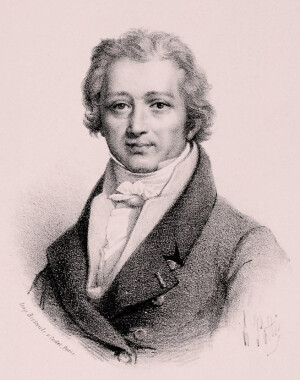
Sébastien Erard
Abbé Roussier provided a detailed description of the first instrument Erard built in the *Journal de Paris*. Erard was not quite 25 years old at the time, and this instrument established his reputation. The Duchess of Villeroy, a friend and lady-in-waiting to Queen Marie Antoinette, became his first patron. In one of the outbuildings of her castle, he built a piano—one of the first in France. That instrument had already been known in Germany and England for several years, but in France it was used only in the progressive Parisian circles of the wealthy and artists and was imported from Regensburg, Augsburg, or London.
In 1777, Erard opened his own small workshop on Rue de Bourbon, where he built his first fortepiano and, later, his first ““extra-grand modèle de concert”—a piano no longer intended for chamber music but, due to its dynamic range—which was enormous for its time—was ideally suited for orchestras. The Paris Conservatory purchased one, and the instrument immediately became the favorite of Fauré, Saint-Saëns, Ravel, Clara Schumann, and Liszt.

Queen Marie Antoinette, Jean-Baptiste André Gautier-Dagoty, 1775
His success as an instrument maker aroused much envy among his competitors. He was officially charged with working in Paris without a license. At the intercession of King Louis XVI’s wife, Marie Antoinette, the monarch granted him the license on his own authority and appointed him purveyor to the court. Marie Antoinette was known not only for her exorbitantly luxurious lifestyle and her lack of social awareness, but also for her love of music. She played the harp, the harpsichord, and later the fortepiano, an instrument that became particularly popular in France largely because of her. Sébastien Erard became Marie Antoinette’s protégé, and in return, he built seventeen table pianos and several very special grand pianos for her.
Once his reputation was established and Sébastien Erard needed more space, he moved into larger premises on Rue de Mail in 1781. He persuaded his brother-in-law to join him in Paris. Their first pianos were rectangular with a keyboard spanning five octaves. Erard later also built a two-manual piano-organ combination for Marie Antoinette.
In 1788, his brother Jean-Baptiste, who was two years older, joined him. He invested a great deal of money in the company to cover its debts, but also to expand it. Both brothers signed a deed establishing an official partnership, and from that moment on, the company was known as Erard Frères. Jean-Baptiste was not a technician himself, nor did he possess his brother’s entrepreneurial spirit. However, until his death, he maintained an extensive archive documenting the company’s ups and downs.
With money from Jean-Baptiste, the brothers set up a retail outlet in London that year at 18 Great Marlborough Street. With foresight, Sébastien had already applied for a license there two years earlier. Another loan was needed to cover transportation costs. The London branch sold only instruments; production remained in Paris.
The large amount of materials, machinery, and 120 employees meant that the Erards relied heavily on loans. The French Revolution of 1789 put an end to their business. Many wealthy people fled and sought refuge in England. The Erard firm had a reputation for making watches exclusively for the wealthy, and since it was also a purveyor to the court, the Revolutionary Tribunal confiscated all its assets and allowed the company to be destroyed by an angry mob. A few years later, that same court sentenced Sébastien’s patroness, Marie Antoinette, to the guillotine.
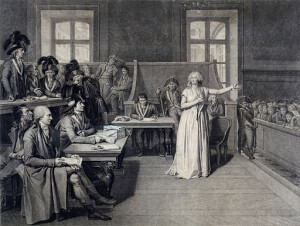
The Condemnation of Marie Antoinette, October 1793. After Pierre Bouillon.
Sébastien did not wait in Paris to see how events would unfold. Shortly after the French royal couple had made a failed attempt to flee and escape the revolutionaries, Sébastien went to London. In 1792, he opened a piano factory next to the sales outlet, also on Great Marlborough Street. His brother Jean-Baptiste stayed behind to oversee what remained of the Erard company. In 1796, Sébastien had a son: Pièrre Orphée.
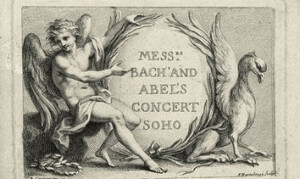
The Industrial Revolution had given rise to one of the world’s wealthiest middle classes in London. To prevent a popular uprising like the one in France, the nobility gradually relinquished more and more privileges, including music. This provided the fertile ground for the most brilliant and vibrant musical life in Europe. Sooner or later, many great musicians came to London to be celebrated. Not only was Sébastien Erard in London, but so was his great French rival, the fortepiano builder Ignaz Pleyel. Pleyel’s pianos caused a sensation at the wildly popular “Salomon concerts”; the “Salle Erard Piano Gallery and Recital Hall” was one of the venues for another popular concert series, the “Pantheon concerts,” organized by C. F. Abel and J. C. Bach.

Part of Sébastien Erard's patent, registered on May 16, 1801
Sébastien was still in London in 1801. On May 16 of that year, he filed a patent application in England for an improvement to a piano action. However, most of this patent application concerned the harp. Apparently, that instrument was slightly more important to him than the piano. In most of Sébastien’s patent applications, the harp was listed first, and the piano was added only later in the application. These applications show that he was beginning to prefer the harp over the piano. In England alone, Sébastien sold 25,000 pounds’ worth of harps in the first year he brought them to market there, which was significantly more than the revenue from piano sales.
In October 1803, the Erard piano commissioned by Beethoven was delivered—a piano “in the style of a harpsichord.” It was Beethoven’s first foreign-made piano and bore the serial number 133. The composer was “so enchanted by it that he considered all the pianos made here (in Vienna) to be rubbish in comparison.” While the sound of the French piano was indeed exquisite, its touch was much heavier than that of the Viennese pianos. After six years, in 1809, No. 133 underwent a series of technical modifications carried out by a local piano technician. As a result, the Erard lost its distinctive sound. Beethoven subsequently found the Erard “completely unusable.” He kept Piano No. 133 only as a souvenir. He did, however, purchase a new one.
Beethoven was “so enchanted by the Erard that he considered all the pianos made here (in Vienna), in comparison, to be junk.”
The Erard empire was torn in two by the prolonged war between the French Republic and Great Britain. In 1793, France had unilaterally declared war, and Erard was forced to begin manufacturing all parts for its London branch in England.
It was not until the Treaty of Amiens in 1803 that the Erards once again saw hope for a better future. They quadrupled their inventory of materials, rented new storage spaces, expanded their workshops, and hired additional workers. The hope and the enormous investments the Erards poured into their French branch turned out to be a tragic miscalculation. Napoleon imposed trade blockades that exacerbated the Erards’ financial problems. In February 1813, the Paris branch of the Erard firm officially declared bankruptcy.
The debts were eventually paid off using the substantial profits from the London branch. In 1814, Jean-Baptiste’s son, Pierre Orphée Erard, went to London to work for his uncle. Pierre proved to be an efficient manager of the London branch. He advertised in the London newspapers with the following:
Erard’s Grand Pianofortes … Notice is hereby given, that His Majesty has been graciously pleased, with the advice of his Privy Council, ... to grant to Pierre Erard of Great Marlborough-street, ... new patentletters for his Grand Pianoforte’.

Letterhead of the Erard company, led by Pierre Erard
Thanks to his success in London, Sébastien was able to return to Paris the following year, where he began participating in international exhibitions in 1819, followed by two more in 1823 and 1827.
Starting in 1820, Sébastien gradually slowed down, began collecting art, and purchased a wing of the La Muette country house in Paris, near the Bois de Boulogne. In 1823, he was awarded the Croix de la Légion d’Honneur.
His technical expertise was called upon one more time. The organ in the Tuileries had been destroyed during the Revolution, and in 1830, Sébastien Erard was commissioned to restore it. He was unable to complete the restoration because he died in August 1831. Jean-Baptiste had already passed away four years earlier. Pierre Erard inherited the company and the most valuable private art collection in France. Among the 264 paintings were works by Rembrandt, Dou, and Poussin. The artworks were auctioned off, and with the proceeds, Pierre was able to pay off the debts.
Over the years, Erard had remained a purveyor to the court and had learned in France how to deal with the nobility and the “beau monde.” In England, too, the company gained a foothold with the British royal family. In 1843, the Queen of England commissioned not an English piano, but an Erard piano for the yacht “Victoria and Albert”—an instrument finished in such a way that it blended seamlessly into the ship’s opulent interior.
In the Parisian music world, there was a lively rivalry between Erard and Pleyel. Ignaz Pleyel had won over Chopin, who promoted Pleyel pianos wherever he went. The “Salle Pleyel,” a concert hall where Chopin often performed, played a major role in this. The Salle became an important hub for the music-loving Parisian art and music scene.
At a time when the fortepiano is still babbling like a toddler, Sébastien is already making his sing. “None of the daughters of beauty will possess the magic of an Erard,” sighed Felix Mendelssohn
The first “Salle Erard” was a modest concert hall, primarily suited for chamber music. In 1850, Pierre Erard had a larger hall built, which over the years would grow into another musical epicenter in the French capital. The Salle would remain in operation until 1931. Franz Liszt performed there as a child prodigy and became the Erards’ “family pianist.” What Chopin was to Pleyel, Liszt was to Erard. In 1824, Franz Liszt performed in Paris on a six-octave Erard piano. Erard offered him a contract through the end of 1825. Liszt was able to tour throughout England at Erard’s expense, accompanied by several of the company’s pianos. Their five-octave grand pianos cost 3,000 francs at the time; in 1852, the seven-octave pianos cost 3,500 francs.
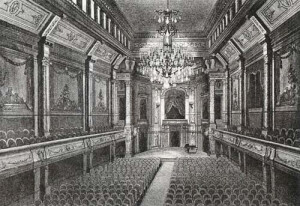
Salle Erard in Paris, second half of the 19th century
In 1865, Erard produced 1,700 pianos in France with a workforce of 425 and approximately 500 in England. Competition was fierce, with Pleyel in particular on the rise. That year, the company built a mechanized factory and was able to produce 3,000 pianos with fewer workers. Another major Parisian piano manufacturer, Gaveau, produced 2,000 pianos annually with 350 workers before the rise of Pleyel and Erard. Erard sourced the wood for the exterior from 12 plantations in Brazil, after which it had to dry for an entire year. For the soundboard, both Pleyel and Erard imported pine from Italy. From 1777 to 1959, the Erard company built over 131,000 pianos.
On Erard pianos, Liszt and his great rival Thalberg battled it out in Paris to determine who could claim the title of the greatest. The duel ended in a tie. The jury ruled that “Thalberg is the world’s foremost pianist, and Liszt is the only one.” Other famous composers were also devoted to the brand: Haydn, Beethoven, Verdi, and Ravel each owned one, and Wagner composed the night scenes from the opera *Tristan und Isolde* on one. One biographer argued that between 1820 and 1931, two-thirds of all classical music was written on an Erard.

Detail of a double-pedal harp by Maison Erard, London, 1820, Collection of the Musée de la musique, Paris. Photo by Claude Germain, 2011
Around the turn of the century, the harp was almost as popular in France as the piano. Sébastien Erard produced large numbers of both instruments. He spent eight years working on the concert harp. Among the nobility, it was “in vogue” to play the harp. Marie-Antoinette had already played this instrument before she met Erard.
Sébastien believed that his concert harp was more versatile than the piano because, with the help of the pedals, a player could produce 21 pitches per octave, whereas the limit for pianos was 12. The Erard harp may have been advanced, but it did not allow for a quick change to a different key. And that was exactly what modern composers such as Wagner, Liszt, Richard Strauss, and Debussy were looking for in their complex music. Erard’s rival, Pleyel, therefore decided to develop a different kind of instrument: the chromatic harp, which met those needs. The only thing that proved impossible on the new Pleyel were glissandi. And so Erard commissioned Maurice Ravel to compose a piece of music that would specifically highlight the strengths of the Erard harp, on which glissandi were possible.
Pierre Erard entered as many entries as he could in competitions at major exhibitions. At the Crystal Palace Exhibition in London in 1851, both the French and English branches of the company had exhibited pianos. The French branch displayed two “extra grand” pianos. Pierre’s English branch exhibited various pianos and harps; he received the Grand Medal of Honor for both entries.
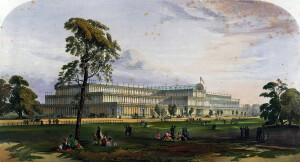
Crystal Palace at the "Great Exhibition" in 1851
The following entries were submitted to the Exposition Universelle in Paris in 1861, 1885, and 1889; all three attracted millions of visitors. At the first two, Erard received a Grand Médaille d’Honneur, and at the 1889 exhibition, he received the highly coveted Grand Prix.
In 1890, Erard was forced to close its London branch due to intense competition from English piano makers. The French branch continued to operate.
Sébastien Erard was the first piano maker in Paris to equip a piano with pedals so that variations in playing could be introduced. He created several types: a sustain pedal that prolonged the sound, a transposition mechanism, a celeste pedal, and a bassoon pedal, the latter of which used leather to press against the strings, causing them to buzz. A knee lever moved the mechanism further than the action pedal, causing the hammers to strike only one string. He also patented a piano in the shape of a secretary desk, with two soundboards stacked one above the other, and invented a transposing piano with a wooden, cylindrical soundboard that was moved back and forth by four rollers, so that the strings of the higher or lower notes were struck by the same hammers.

The Erard building at 18 Great Marlborough Street, London. Image courtesy of the Look and Learn Historical Picture Archive
In France, Sébastien Erard also patented his double-escapement (repeater) mechanism, while Jean-Baptiste’s son, Pierre, “Inventor, Designer, and Manufacturer,” at 18 Great Marlborough Street in London, applied for a patent for this same mechanism. This was also the first of the nine other patents granted to Pierre Erard there. No other piano maker had such a wide variety in his catalog.
With the success of the Salle Erard in Paris in mind, the company opened a similar venue in London. England was miles ahead of France in the field of pianos, and Erard had to do everything in its power to establish a reputation there as well. Erard closed its manufacturing branch on Great Portland Street, but in 1894, a large piano showroom and concert hall opened on Great Marlborough Street. The Polish pianist Ignacy Jan Paderewski presided over the opening. His French debut at the opening of the Salle Erard in Paris had been a great success, and the opening concert at the London Salle Erard brought Erard a similar level of fame in England. The production facility on Great Portland Street subsequently had to be expanded.

After the patents expired, Erard was unable to keep up with competitors such as Steinway. The death of Pierre Erard in 1855 meant that, for the first time in more than eighty years, there was no longer an inventive genius at the helm of the company.
Pierre’s wife, Camille Erard, took over the company at the age of 43. This made Camille one of the few women of her time to lead a major international company. In 1855, Richard Wagner wrote to her asking her to receive him in Paris and purchased a piano from her. Clara Schumann also expressed her support. This strengthened Camille’s conviction that Erard would continue to have a place in the world. She undertook two ambitious projects. The first was the construction of a concert hall on Rue du Mail. The second was the construction of a massive modern factory on the outskirts of Paris.
Ultimately, a lack of innovation, combined with increasing competition from German and American piano manufacturers, led to the eventual downfall of the Erard company. Camille died in 1898. After that, the name was bought and sold by various companies. The Erard name continued to exist in name only. A few special instruments were built, but there was no production line. In 1959, a merger with Gaveau took place, followed a year later by a merger with Pleyel. In 1970, the Schimmel company acquired the business, and a year later, Erard became part of the international Schimmel Company. No other company has contributed as much to the development of the piano over the course of two centuries as Erard. The Manufacture Française manages the Erard archives and builds replicas of Erard pianos in an effort to pass on this historical knowledge.
Adelson R., Roudier A., Nex J., Barthel L., Foussard M., 2015 The History of the Erard Piano and Harp in Letters and Documents, 1785-1959, Cambridge
Bloom, P., 1987, Music in Paris in the 1830’s. New York, Pendragon press
Brancour, R., 1921, History of Musical Instruments. Paris
Burnett, R., 2004 Company of pianos, London
Emmanuel, A., 1980, *The Harp: Its Evolution and Makers*. Paris
Getreau, F., 1996, The Instrument Collections of the Paris Conservatory, 1793–1993. Paris
Harding R.E.M., 1978, The Pianoforte – its history traced to the Great Industrial Exhibition of 1851
Janmaat, F., 2019. Sébastien Erard, the Greatest Harp and Piano Maker of All Time. Enkhuizen
Melville, D.,1971, Beethoven’s pianos: The Beethoven Companion. London