Instrument

cello
Jean Baptiste Lefèbvre
Amsterdam,
± 1760
played by
Jobine Siekman
Jobine Siekman

*± 1730 , Lannoy (Lille) †1775 , Amsterdam
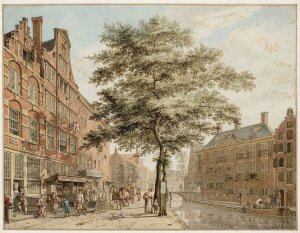
Many books mention a collaboration between Lefèbvre and his son, who was also named Jean Baptiste. This must be based on a mistake, since he had already passed away when his son was 6 years old. Although no works by his son are known to exist, he does appear to have worked as a violin maker. It is worth noting that a workshop operating under the name J.B. Lefèbvre existed until 1946, and its origins can be traced directly back to the violin maker described here. Over the course of nearly two centuries, the workshop was consistently passed down to family members or from master to apprentice.
Lefèbvre is known for his violins, violas, and cellos. His large violas, in particular, are unique, given that the trend in his day was to build small violas; there was simply a preference for playing smaller violas. These large violas of his are the perfect size for contemporary violists and are therefore highly sought after. Lefèbvre produced many different models; he allowed himself a great deal of creative freedom. In addition, there are instruments with high and low arches, sometimes with short or long corners. His varnish also varies, ranging from light orange to brown. However, there is a series of stylistic characteristics that remain consistent; this is particularly evident in his corners, where the inlay extends all the way to the edge, in the f-holes, which often have slightly oval openings, and in the eye of the scroll, which is often slightly off-center. Another unique detail is that Lefèbvre is the last Dutch luthier to regularly use whale bone for the black inlays on his instruments.
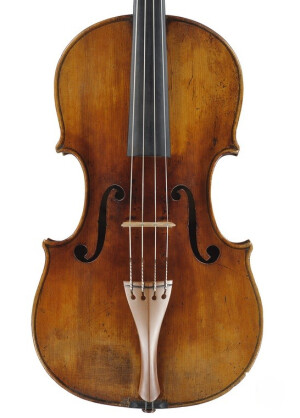
Viola by J.B. Lefèbvre, c. 1760, from the collection of the Musical Instrument Fund
D.J. Balfoort, 1931 *Dutch Violin Makers*, H.J. Paris, Amsterdam.
Bolink, J., Giskes, J., Lindeman, F., and Stam, S., 1999, 400 Years of Violin Making in the Netherlands, Amsterdam.
Amsterdam City Archives, accessed in 2025


