Instrument

violin
Giuseppe Fiorini
Zurich,
1930
played by
Inês Pais
Inês Pais

*1861 , Bazzano †1934 , Munchen
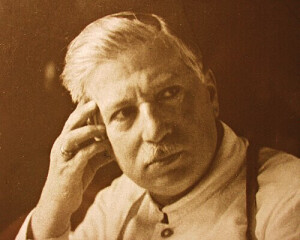
Giuseppe Fiorini grew up in the countryside west of Bologna. Raffaele Fiorini, his father, was a miller at the sawmill in the hamlet of Bazzano. Around the age of twenty, he had learned from the musicians Giovanni and Ignazio Tadolini (1789–1872 and 1797–1873) how to build violins. They had brought the French method of violin making to Italy, and Raffaele’s early work was based on that tradition. Like all violin makers of that time, Raffaele Fiorini could not make a living from violin making alone and continued to work as a miller until he had acquired sufficient knowledge and contacts to open a violin-making workshop in Bologna. When Giuseppe was six, the family moved to the city center. There, Raffaele took up residence in a large space within the prestigious center for art and culture: the Palazzo Pepoli Vecchio. Giuseppe was drawn to his father’s work and began working with him in the workshop at a young age—a place he had been visiting since he was six.
Fiorini’s workshop was a lively place and was frequently visited by other violin makers with whom he enjoyed exchanging ideas. There were also students who had come to Bologna in large numbers to study a new violin-playing technique taught at the Bologna Conservatory. As one of Europe’s oldest university cities, Bologna had always attracted young people. Partly because of this, in keeping with the optimistic spirit of the late nineteenth century, the city was able to embark on a new era of vitality, driven by a belief in progress through science and technology. The music scene flourished once again, and the number of violin makers increased. The violin makers of Emilia-Romagna built upon the “classical period” but developed their own, more modern style. Fiorini was the founder of this movement.
Raffaele Fiorini built his instruments based on models by the classical violin makers Amati and Guarneri, but his construction method was French. This method of construction was widely adopted in much of northern Italy under French rule in the nineteenth century; Giuseppe, too, learned this method. He learned how to build instruments against the inside of wooden molds, just as his father had done. This method of working offered the luthier a great deal of freedom to follow his own creative process, but it was not truly Italian—at least not in the way the old Cremonese masters did it. Over time, Giuseppe Fiorini broke with the French tradition. This put a strain on the relationship between father and son and led to his departure in 1885.
In June of that year, Giuseppe opened his own workshop in the Palazzo Santo Stefano. Located on a lively square, surrounded by historic buildings, it was just a stone’s throw from his father’s studio. Although he was now independent, he wasn’t yet successful enough to afford the high rent, so in 1887 he moved to Corte de’ Galluzzi, in the nearby historic center of the city where, two hundred years earlier, the violin maker Giovanni Tononi had lived and worked. From that point on, he was truly able to build according to his own vision.
As early as 1881, Giuseppe had traveled to Milan to view the instruments, tools, and molds of Stradivari that Count Cozio de Salabue had put on display. This had led him to decide to adopt not only the models of the Cremonese masters but also their methods.
Through his father, he had already established contacts with many Italian instrument makers; they had sparked his interest in the restoration and appraisal of old master instruments. Moreover, he saw opportunities to supplement his income by trading in antique instruments, in addition to building and repairing them. Around 1880, he traveled extensively and expanded those business contacts far across Europe. Eight years later, he had built up such a wide network that he was able to organize an exhibition in Bologna featuring antique instruments gathered from all over Europe. Interest in the exhibition was high, not least because many people had gathered for the events celebrating the 800th anniversary of the University of Bologna. Giuseppe Fiorini’s name was frequently mentioned in their publications. They even invited him to write a number of articles on violin making. That same year, he received a gold medal for his entry in the prestigious “Grande Esposizione Emiliana,” which was also held in Bologna. The festivities surrounding the exhibition lasted six months and attracted 500,000 people.
During one of his travels through Germany, Giuseppe had met Walburga Rieger. She was one of the seven daughters of Andreas Rieger, a violin maker in Munich. He married her in 1889 and settled in Munich. Rieger had a workshop in Mittenwald and opened a second one in Munich, which he ran together with his son-in-law, Giuseppe Fiorini, until 1898. All seven of Rieger’s daughters worked there. Giuseppe did not build many instruments during that period, but he did a great deal of restoration work and was primarily involved in the trade, which allowed his expertise to grow. After his reputation as an expert had been established internationally around the turn of the century, he, along with several others, took the initiative to establish the Association of German Violin Makers, of which he later became president.
In 1898, the same year that Andreas Rieger stopped working and handed the business over to Giuseppe, Giuseppe’s father died. Officially, he was Raffaele’s heir, but he largely renounced his claim to the estate. After his visit to Bologna, he bequeathed everything to Raffaele’s most devoted employee, Monterumici, who carried on his father’s workshop. Giuseppe may have chosen a different path than his father, but he had come to hold deep respect for the Romagnese violin-making tradition that his father had fostered.
“Rieger und Fiorini,” as the business was still called, was doing so well that in 1902 he moved the workshop to a very prestigious location within Munich: Karlsplatz. His workshop was highly regarded by other luthiers, connoisseurs, and musicians, just as his father’s had been. He had several apprentices and employees, including Ludwig Bart, Hans Edler, and Gottfried Nairz. At that time, Giuseppe Fiorini was considered the best violin maker in Germany, which allowed him to afford to build instruments exclusively on commission. He worked under his own name in Munich until 1915.
At the start of World War I, Italy was still neutral, but a year later, Germany and Italy were at odds. As a result, Giuseppe was forced, with the help of business associates, to flee with his wife to neutral Switzerland. He started over in Zurich. It would become one of his best and most productive periods—not least because, in 1916, he took on an exceptionally talented student there: Ansaldo Poggi.
By then, Giuseppe Fiorini had built an international reputation and maintained friendships with people from the highest circles of art, culture, and royalty. Among them was the Marquise Paola della Valle de Pomaro. She was the owner of Stradivari’s workshop inventory: drawings, recipes for his famous varnish, molds, and tools that Ignazio Cozio de Salabue had bequeathed to her. After years of negotiations, Giuseppe Fiorini acquired this collection in 1920. What he had been allowed only to view in Milan in 1881, he had finally obtained.
Convinced that his Stradivari collection belonged not in Switzerland but in Italy, he left Zurich in 1923. He made efforts to place the collection in a new violin-making school to be established in Cremona and went to Rome himself. He did, however, keep his workshop in Zurich. In Rome, he opened a workshop one last time. His eyesight gradually deteriorated, forcing him to rely increasingly on his assistants, Simone Sacconi and Ansaldo Poggi. Together, they built dozens more violins there until 1933, all based on Stradivari’s design. In 1930, he donated the Stradivari collection to the city of Cremona.
The many articles Giuseppe wrote for German and Italian magazines clearly show that he was not only an exceptionally skilled violin maker, but also a well-read man with a broad knowledge of art and culture. In recognition of his achievements, the Italian government awarded him the title of “Cavalieri.” His father had been the founder of the Romagnese violin-making tradition. Giuseppe, too, wanted to leave behind more than just his instruments. Upon his return to Italy, he made several attempts to establish a violin-making school in Cremona, but to no avail. Disappointed and nearly blind, he returned to Munich with his wife in 1933. The “Scuola Internazionale di Liuteria” was eventually established, but not until four years after his death.
In the early years following 1877, Giuseppe Fiorini continued to build instruments modeled after his father’s. That changed in 1881, when he was captivated by the beauty of Stradivari’s work. Giuseppe distanced himself from the Bolognese method and focused increasingly on the Cremonese style and techniques. This caused a rift with his father. His work became more elegant, and he began experimenting with different types of varnish, looking to the old masters for inspiration on what would suit him best.
He left his father’s workshop and traveled to seek inspiration from other luthiers. When he returned and started his own business, he focused entirely on the Cremonese masters. This is evident in his work, which began to resemble Stradivari’s models in every respect.
After settling in Munich, he copied Stradivari’s instruments more skillfully and accurately, but added his own personal touches. In 1920, he acquired the molds that Stradivari had used to build his instruments. From that point on, he used them to craft his own violins. Convinced of their unique qualities, he did not need to spend time developing his own model, but was able to devote himself entirely to the perfect execution of his work. Only around 1922 did he build a small number of violins in the style of Guarneri.
Giuseppe Fiorini sought to provide an intellectual foundation for the more or less intuitive way in which Stradivari had crafted his instruments. He wanted to do more than simply replicate what Stradivari had done; he also wanted to understand and fully grasp the process. To that end, he experimented extensively; his efforts to match or even improve upon the sound of the classical instruments are well documented. He developed the method for acoustically matching the top and back plates of a stringed instrument—a technique still used by violin makers today.
Once Giuseppe’s reputation was established, he used only the very finest quality wood. Virtually all back plates consist of two pieces; only a single instrument is made from a single piece. Connoisseurs recognize in Fiorini’s work a refinement and precision found in very few others. Giuseppe Fiorini built over five hundred violins, as well as approximately 10 violas and 10 cellos.
Fiorini’s varnish in Munich and Rome ranged from reddish-brown to orange, and he applied it more thickly there than he did during his time in Zurich.
No matter how much he had distanced himself from the Bolognese violin-making tradition, he would never deny his heritage. His labels bore, in addition to the place and year of manufacture, the words “Giuseppe Fiorini ‘da Bologna’.”
Giuseppe Fiorini’s influence can hardly be overstated; he revived the Cremonese tradition of violin making. He wrote about it in trade journals and magazines, but also trained many students, including Ludwig Bart, Hans Edler, Gottfried Nairz, Ansaldo Poggi, Wolfgang Türcke-Bibié, Pietro Messori, Giuseppe Castalgnino, Arrigo Fiorini, Simone Sacconi, and Kurt Schuster.
The violin in the collection of the Musical Instrument Fund bears the Zurich maker’s mark and is dated “1930.” In that year, he spent most of his time in Rome, but tireless as he was, he still traveled. One possibility is that the violin was built in Rome based on the model he used in Zurich. Another possibility is that Giuseppe Fiorini built a few instruments in his Zurich workshop that year.
Tarisio, Cozio archive “Raffaele and Giuseppe Fiorini”, Dmitry Gindin and Roberto Regazzi, bezocht in 2019.
Strocchini, G., 2015, Liutai Romagnoli, Cremona.
Dati L., Nicolini G., “Giuseppe Fiorini: The Champion of the Revival of Italian Violin Making,” Bologna-Cremona 2011.
Piccolellis de, G.; 2007, Fiorini, Ancient and Modern Lute Makers, Bologna.
Panorama of Modern Bolognese Violin Making: Influences and Relationships, 2002, The Scientific Committee "Il Suono di Bologna”, Bologna.
Maragi, M., 2000, Five Hundred Years of Monte di Bologna, Bologna.
Versari A., 2002, Modern Violin Making in the Emilia-Romagna Region. Bologna.
Blot E., 2001, 1860-1960 - A century of Italian Violin Making - Emilia e Romagna, Cremona.
Brinser M., 1978 Dictionary of 20th Century Italian Violin Makers, Bologna - A living tradition of Violin Making, zp.
Fiorini, E.; Frignani, Lorenzo, 2007. The Luthier Giuseppe Fiorini. Modena.
Santoro, E., 1988. Giuseppe Fiorini and the Stradivari Relics. Cremona.
The Strad, January 1984 Bologna, a living tradition of Violin Making.
Vannes, R., 1985, Dictionnaire Universel del Luthiers, Brussels: Les Amis de la musique. Spa.
William, H., 1969, Universal Dictionary of Violin & Bow Makers. Brighton.
Hamma, W., Master of Italian Violin Making, Wilhelmshaven 1993.