Instrument

violin
Giovanni Tononi
Bologna,
± 1700
played by
Filipe Fernandes
Filipe Fernandes

*±1640 , Bologna †1713 , Bologna
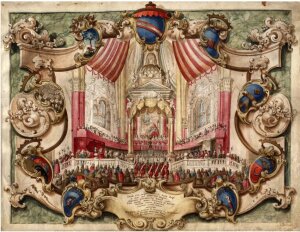
Giovanni’s father, Gaspare, was a “scatolaro” (box maker) who, according to researchers Regazzi and Pascal, also built lutes, guitars, and other instruments—something many “scatolari” in northern Italy did. Giovanni’s date of birth has not been found, but it is believed to be around 1640. In his early years, Giovanni undoubtedly became acquainted with violin making through his father’s work. And judging by his first instrument, it was of a simple design. Not only his father and Felice, but also Giovanni’s uncle Pietro Andrea (1647–1713) was a violin maker. It didn’t take much to become familiar with violin making; in addition to the Tononi family, there were at least ten other violin makers working in the city at that time, which had a population of around 60,000.
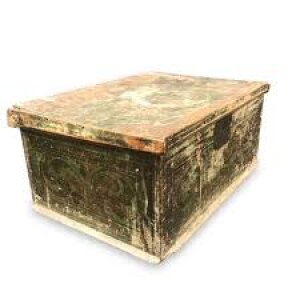
Example of a "scatola" made by a box maker
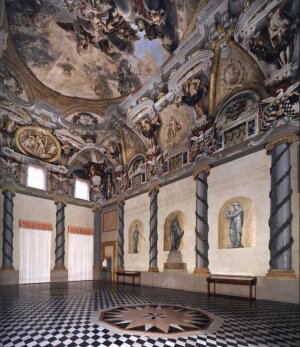
Palazzo Pepoli, Bologna
According to the city archives, Giovanni was a “gitarraro,” a term used in Bologna to refer to both violin makers and makers of guitars and lutes. He married in 1670. His son Felice was born that year, and Carlo Annibale was born five years later. He did not yet have his own workshop where he built instruments under his own name. It is possible that from 1675 to 1688, Giovanni made violins for other violin makers in the city. According to John Dilworth, he did not begin working as an independent luthier until 1688. Given that Giovanni was already working for the most influential Pepoli family in Bologna around 1690, he had quickly established a significant reputation.
In 1680, Giovanni Tononi was still located in the Corte Galluzzi, which was little more than a small alley. By 1681, he already had a workshop on Piazza Pavaglione, in the city center and close to the Basilica of San Petronio. The fact that Giovanni quickly made a name for himself among Bologna’s many instrument makers can also be inferred from the high appraised value of one of his cellos, which was found in 1700 in the burned-down workshop of Andrea Fancelli. From the label inside that cello, dated 1697, it can be inferred that he had moved by that time from Piazza Pavaglione to a better location: Via San Mamolo, adjacent to Piazza Maggiore, where the Teatro Comunale stood and which was the cultural center of Bologna. On Via San Mamolo, the workshop was named “all’Insegna di S. Cecilia.”
In Bologna, there were roughly two schools of thought in violin making. The first traces its origins to the late fifteenth and early sixteenth centuries, when outstanding lute makers from Füssen (Southern Bavaria) had come to Northern Italy. They had established a solid foundation for instrument making in Bologna. Many of their descendants were still working there. They had their own style and method of construction and held fast to them for a long time. In addition, there was another school, one that originated in Cremona, specifically that of the Amati family. Giovanni Tononi largely aligned himself with the latter.

Basilica of San Petronio, Bologna. Woodcut.
Music played a major role in Tononi’s circle; sacred music was performed at the Basilica of San Petronio, and secular music at the Accademia Filarmonica. Founded in 1666, the Accademia specialized in string instruments and voice. G. Benvenuti, Corelli’s teacher, was one of the leading figures of the violin school at the Accademia and a friend of Tononi’s. Vitali was the concertmaster of San Petronio but also one of the founders of the Accademia Filarmonica. Thanks in part to their efforts, Bologna became a place where many great musical figures from all over Europe stayed for short or extended periods: Wolfgang Amadeus Mozart, Arcangelo Corelli, and Carlo Broschi—known as “Farinelli”—as well as composers such as Giuseppe Torelli, Giacomo Antonio Perti, and Antonio Vandini. Giovanni Battista Martini, a music theorist at the Accademia, was one of Mozart’s teachers.
Giovanni Tononi lived in an international cultural milieu. Bologna was considered one of the essential stops on the “Grand Tour” that artists and writers from Spain, France, England, and Germany undertook as part of their cultural development. This fostered a cosmopolitanism that held enormous appeal for students. The University of Bologna was flourishing, but the modernism brought about by the new era led to scientific work being severely suppressed by the Vatican.
Not only composers, but also talented musicians from all over Europe who wanted to learn to play the violin or cello at the highest level flocked to Bologna. The Accademia was the first music institute in Europe to offer a thorough education. All of this had a major impact on violin making in the city. In addition to Giovanni Tononi, at least ten other violin makers were working in Bologna.
Giovanni Tononi ran his business with the help of his son Carlo Annibale and, presumably, his other son, Felice. Giovanni’s brother Pietro Andrea, who was slightly younger, was listed as a “gitarraro,” but did not have his own business. He presumably helped Giovanni make instruments until 1709. After his marriage, he became wealthy and is no longer mentioned as a violin maker. Finally, Giovanni’s youngest son, Antonio Maria, also learned the trade and worked alongside his father.
Under Giovanni's guidance, Carlo had developed into a highly skilled violin maker who not only built instruments for Giovanni but also began selling instruments under his own name as early as 1702.

(Partial) View of Bologa, F.B. Werner, ca. 1750
Bologna was musically conservative, while the rising city of Venice was more progressive and significantly more dynamic. Early biographers, including Joseph Pearce (of Sheffield), mentioned Giovanni Tononi in connection with Venice as early as 1866, but there is no factual evidence to support this. However, there is a violin with a label on which his son Carlo mentions Venice as early as 1700 as the place where he built the instrument. In that year, he was still working for Giovanni. It is possible that Carlo wanted to leave his father’s workshop for one in Venice, or that he wanted to explore the new culture and went to Venice for a short time. In any case, he was back in Bologna by 1701. The guild in Venice was so strict that virtually no one from outside the city was allowed to settle there without undergoing a long and complicated procedure.
Once back in Bologna, production at the family workshop increased significantly, partly due to Carlo, and as Giovanni grew older, Carlo took on an increasingly important role there. Gaspare lived a long life; he was 86 years old when he died in 1693, and Giovanni died in 1713. After Giovanni’s death, Carlo took his father’s place.
Carlo continued to produce excellent instruments in Bologna until 1717, but in that year he left for Venice for good. Notarial deeds show that he had debts that could not be collected in the city-state of Venice. There, despite fierce competition, he became a highly prominent violin maker.
Giovanni Tononi primarily based his violins and violas on the Amati model, though he did vary in his execution of it. Some are elegant, but others are a bit “angular” in the Stainer style, as some connoisseurs describe them. He used a wide range of materials: from a plain maple back to intensely figured wood.
With its rather small and tight curves, the scroll is characteristic of Tononi, especially on his cellos. The f-holes are well-carved and open, though not always symmetrical and positioned somewhat close together.
The meticulously crafted edge inlay is made of beech wood and extends well into the corners. Tononi often left the tool marks visible.
Viewed over the course of his entire career, the varnish he used varied considerably: from a very Amati-like golden honey-brown to a darker reddish-brown, with a variety of textures.
Tononi’s cellos are renowned. They are large in size, in a way that is reminiscent of Goffriller’s finest work. The top of some cellos is not made of two pieces, but of several, sometimes consisting of as many as five strips. They are often built asymmetrically.
John Tunonus made in Bologna / on Pavaglioni Square / in the year of our Lord 1690
John Tunonus made in Bologna / on Pavaglioni Square / in the year of our Lord 1696.
John of Tononi made in Bologna / on Via Mamuli in the year 1699
Mishkin H. G., 1939, The Solo Violin Sonata of the Bologna School New England Chapter of the American Musicological Society.
Moya H. Piper T, 1916, Violin tone and violin makers, Londen.
Jalovec K., Hamlyn P. 1964, Italian Violin Makers, London.
Schnoebelen. 1990, The Role of the violin in the resurgence of the mass in the 17th century. Early Music.
Regazzi R. en Pasqual S. 2019, Lutherie in Bologna: Roots & Success, Bologna.
The Pepoli Family in Bologna and Europe, Bologna State Archives, accessed in 2025.