Instrument

violin
Giovanni Francesco Celoniato
Turin,
± 1720
played by
Robin Veldman
Robin Veldman

*1676 , Turijn †1751 , Turijn
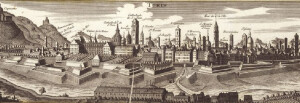
Giovanni Celoniato was born in 1676 in Turin. The Celoniato family lived in a block of houses located between Piazza San Carlo and what is now Piazza Reale, a neighborhood where a number of early violin makers from Paris had previously settled. The city had long been under the rule of the French House of Savoy, which strongly favored French culture, and it was the capital of Piedmont.
The Celoniato family was distinguished and wealthy. Giovanni’s sister was a lady-in-waiting to the reigning monarch of the House of Savoy, who resided in Turin. We do not know what Celoniato’s childhood was like, but an important figure in the life of the young Giovanni was Enrico Cattenar (ca. 1620–1701). He was an elderly violin maker, but still productive, and lived just around the corner from the Celoniatos. Cattenar’s son, who was just a little older than Giovanni, played the bass in the “Cappella Regia,” the orchestra that was permitted to bear the title “royal.” Cattenar himself had built instruments for the “Cappella Regia,” which provided musical performances at court.
We do not know for certain whether Giovanni Francesco Celoniato was actually his student. In Turin, there were no guilds that, as in most other cities, kept good records, but Giovanni’s instruments and those of Cattenar share enough similarities to show that he learned a great deal from the old master. Cattenar died in 1701. Celoniato may have worked for another luthier for some time, as the first violin he made that bore a label did not appear until 1710. He quickly rose through the ranks and was able to take Cattenar’s place as violin maker for the Cappella Regia. Cattenar was renowned for his violins, while Celoniato excelled at building cellos.
In 1696, Giovanni Francesco married and had four sons. Two of them, Giovanni Giuseppe Celoniato and Filippo Antonio Eugenio, held influential positions in the Cappella Regia and the Teatro Reale. In addition, like their father, they also built stringed instruments. They presumably did not build very many instruments. After 1720, a few violins by the eldest son are known, and by the youngest, a small eight-stringed violin, a so-called “pochette d’amour.”
Giovanni Francesco Celoniato was commissioned to build the instruments for the renovated “Cappella del Duomo”
The “Cappella Regia” orchestra played an important role for Giovanni. It provided the music at court and in the cathedral, and it was also largely responsible for the city’s musical culture. The ruling prince of Savoy brought in the best musicians from home and abroad and paid the orchestra members and soloists well. Compared to Venice and other major cities, Turin’s musical culture remained conservative until 1700, but after that, the orchestra underwent a reform. Instruments from the early Baroque period were replaced by ones more in keeping with the times. The orchestra’s name was also changed. “Cappella Regia” became “Cappella del Duomo” and gained a reputation as one of the best in Europe. Its violinists excelled in virtuosity. Giovanni Francesco Celoniato was commissioned to build the instruments for the revitalized “Cappella del Duomo.”
The court encouraged French craftsmanship in every field and favored French talent. Many talented musicians were brought from France to work in Turin, including two relatives of the composer François Couperin. One was appointed Kapellmeister, while the other became director of the Teatro Reale. This was followed by a long-standing exchange between musicians from Turin who went to work in Paris and vice versa, interrupted by the outbreak of war, which in 1706 led to a prolonged siege of Turin.

Somis
Giovanni Battista Somis (1686–1763) was born in the same block of houses where the Celoniatos lived. He was a promising violinist and went on to study with Arcangelo Corelli in Rome. When he returned to Turin in 1706, he was appointed director of the “Cappella del Duomo” and later became a violin teacher. News of his virtuosity reached Paris, and many French students came to Turin to study with him. These violinists usually brought their own instruments, which were often unsuitable for the “modern” virtuoso style they were learning from Somis. Celoniato, who had built a violin for Somis, received many instruments from Somis’s French students through him. The French proved to be eager buyers of Italian instruments, which Celoniato was often able to supply thanks to his contacts with other dealers.
As was the case for virtually all violin makers, the trade in antique instruments was an important source of income. Paris played a central role in the European violin trade. Parisian merchants eagerly sought out contacts south of the Alps who could supply them with Italian instruments. These were in high demand in Paris. And since Turin was under French control and had long maintained a trade route with Paris, traveling merchants often visited there.
In Paris, Andrea Castagneri (1696–1747), a native of Turin, was one of Giovanni Celoniato’s business contacts. He had moved to Paris as a young violinist, where he began playing with the prestigious “24 violons du Roy.” Giovanni had known Andrea since his youth because they were born on the same city block. Around 1720, Andrea Castagneri became a violin maker and began dealing in antique Italian instruments. Andrea did not return to Turin but remained in Paris, where he became an important link between Celoniato and Paris.
At the age of 70, Giovanni Celoniato became so seriously ill that he had his will drawn up in 1746. That year, he built one more cello, but was then forced to stop working. He died five years later.
Based on striking similarities between Celoniato’s instruments and those of the violin maker Giovanni Battista Genova (active from about 1730 to 1770), experts now believe that he was Celoniato’s student. After Celoniato’s death in 1751, Genova was registered at the same address as Celoniato. It is presumed that he continued Celoniato’s business for several more years.

Cozio di Salabue
A cello by Giovanni Celoniato was discovered in the collection of Count Cozio de Salabue, the 18th-century connoisseur and collector of rare and valuable string instruments, following his death. This was remarkable, given that he had previously been forced to sell most of his instruments due to financial difficulties. However, he had kept the Celoniato.
The tradition of violin making that Cattenar and Celoniato carried on dated back to the first half of the seventeenth century. Tyrolean emigrants who had fled the war of 1618–1648 had brought the earliest knowledge of violin making with them to Turin. After the city fell into French hands, several Parisian violin makers took their place at the urging of the House of Savoy. They had mostly learned the craft from Dutch-Flemish violin makers. The construction method that emerged from this cross-pollination formed the foundation upon which later Turin violin makers built. In his early years, Enrico Cattenar worked using this early technique. For example, he did not glue the sides against the back, but rather into a groove in the back. His later work shows greater influence from Cremona, which was growing in popularity. In his early years, Celoniato still used this old construction technique, but later switched to the method used in Cremona.
In Cattenar’s work, the influence of Andrea Amati was evident; Celoniato’s instruments, with their long corners and the placement of the f-holes, show a somewhat greater affinity with Stradivari. Some experts suspect that Celoniato was also familiar with Bergonzi’s work, as the angular curve in the middle of the violin and the slender f-holes closely resemble those of Bergonzi.
The scroll on Celoniato’s instruments is elegant, distinctive, and usually has a narrow curve. The keybox is strikingly narrow and long. The influence of the early Parisian makers is evident in the color and consistency of his varnish, which closely resembles that traditionally used in Paris: harder than Cattenar’s and always ranging in color from golden-yellow to golden-orange.

Clutch bag by Giovanni Francesco Celoniato, courtesy of © Musée de la Musique © Photo by J.M. Anglès
Virtually nothing is known about the extent of Celoniato’s body of work. As far as we know, he did not keep an archive. In 1917, Alfred Hill knew of only five cellos and eight violins by Celoniato. Later, violas, more violins, and more cellos were discovered. There is also a beautifully decorated pochette d’amour from 1745 made by him.
Philip J. Kass is firmly convinced that, just as with most violin makers from Piedmont, the labels on Celoniato’s instruments were also replaced in later years with those of makers whose instruments fetched higher prices than Celoniato’s. A well-known example is a violin that was later identified as unmistakably a Celoniato, but bore the label “Joseph Guarnerius, filius Andreæ fecit Cremona sub titulo St. Teresiæ, 1712”.
Two types of cellos by Celoniato are known: a long, narrow model in the style of Stradivari’s “Model B,” and a model more reminiscent of Amati, which was wider and shorter than his other cello.
On many instruments, tool marks are visible across the entire body, but the f-hole is, in contrast, sharply and carefully carved, as are the neck and scroll. Because of this difference in precision, Rattray—who examined a cello made by Celoniato in 1740—speculates that Celoniato had this one made by a student. The edge inlay features somewhat irregularly shaped black bands and a wide central band.
He liked to use locally sourced poplar wood for his cellos, and sometimes for his violas as well.
Giovanni Celoniato had a printed label with the text: “Joannes Franciscus Celoniatus, fecit Taurini Anno 1734.”
It cannot be determined with certainty that the violin in the Music Instrument Fund’s collection was built by Celoniato. The opinions of various experts on this matter are not unanimous, but the possibility cannot be ruled out either. His biography notes that relatively few of his works are known, partly due to the suspicion that many of his instruments were labeled with the names of other makers in order to command a higher price. Instruments bearing an original Celoniato label are extremely rare. For the time being, the foundation therefore maintains the description that the violin is “attributed to” Celoniato. It is possible that greater certainty regarding its provenance and authenticity will be obtained at a later stage.
Rattray D., 2011, Masterpieces of Italian Violin making. Cremona.
Frazier, B, 2007, Cozio, Count Ignazio Alessandro di Salabue, Memoirs of a Violin Collector, Baltimore.
Kass, P. J., ‘Modern Historical Research: The Violin as Art’, Journal of the Violin Society of America.
Thöne J., 2003, Italian & French violinmakers, Grottamare.
Carlson B., Schmitt J. F., Moroder I., Leonhard F., 2001,Italian & French Violin Makers, Keulen.
Blot, E., 2001, Italian Violin Making - Piedmont, Eric Blot Edizioni, Italy.
Vannes, R., 1999, *Universal Dictionary of Instrument Makers*, Spa.
Sacchi, F, 1898, Count Cozio di Salabue: Celebrated Violin Collector, London.
Tarisio; Cozio Archive, accessed in 2022.
Turin State Archives, accessed in 2022.