A close call!
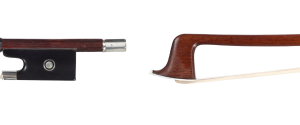
Since 2022, the Musical Instrument Fund has been closely monitoring the potential ban on the trade in pernambuco wood. Many bows are made from this tropical wood, which comes from the Brazilian state of Pernambuco. Last December, we received word that, fortunately, individual musicians and orchestras will still be able to travel with their bows without any problems.
Fears of a total ban
Both in 2022 and last November/December, Brazil attempted to have pernambuco included on the CITES* list (Appendix I)—which carries the highest possible protection status—during the CITES conferences. Bow makers, dealers, orchestras, and individual musicians feared a total ban with far-reaching consequences for the entire industry. In the long run, bow makers would no longer be able to produce new bows, and for musicians and orchestras, it would become an enormous problem to even travel with bows to countries outside the EU.
A Close Call
During the 20th conference, which took place from November 24 through December 5 in Uzbekistan, things initially seemed to be heading in the wrong direction. Many were already losing hope. As a result, the welcome news came unexpectedly on December 5: Brazil had agreed to a proposal by a group of countries to keep pernambuco on Appendix II, with minor adjustments to the exemption that already applied to musical instruments. There was great relief.
For bow makers and dealers, the regulations will become slightly stricter to further combat the use of illegally sourced wood, but this does not spell the end of the craft. Individual musicians and orchestras will still be able to travel with their bows without any problems.
We hope that this compromise will also be acceptable to Brazil in the long term, so that in three years, when the next conference takes place, we won't have to be on edge again.
*Convention on International Trade in Endangered Species of Wild Fauna and Flora