Instrument

violin
Nicolas François Vuillaume
Brussels,
1864
played by
Azra Rustempašić
Azra Rustempašić

*1802 , Mirecourt †1876 , Brussel
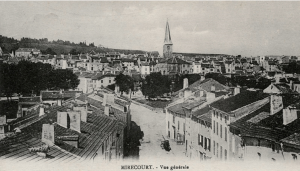
For a long time, the history of the Vuillaume family of violin makers has been shaped more by stories and anecdotes than by facts. It was only later that it became clear how Nicolas François and his brother Jean-Baptiste, who came from humble beginnings in Mirecourt, were actually able to develop their talents: Nicolas François into an outstanding violin maker and Jean-Baptiste into a legendary figure. The myths surrounding the family—whether or not they were created by Jean-Baptiste or never refuted—caused confusion for years in reconstructing their lives and work, but added a great deal of color to the family’s life. Throughout his life, Jean-Baptiste stood in the spotlight, while Nicolas François and his brothers remained in his shadow.
The oldest known relative of Nicolas François is the miller Jean Vuillaume. He lived from 1647 to 1707 in Bassompierre, about twenty-five kilometers from Mirecourt. One of his sons, Charles François (1689–1762), married Barbe Arnould (1692–1739). She was from Mirecourt, where they also settled after their marriage. That was a choice with unintended but far-reaching consequences for subsequent generations of the Vuillaume family.
Mirecourt, which at the time lay at the crossroads of major trade routes, would eventually become the center of the French violin-making world; all the great French makers either came from there or learned their craft there. Like his parents, Charles François had eleven children. Of the four sons, three died; only Claude François Vuillaume (1715–1785) survived. He was the first in the Vuillaume dynasty to call himself a violin maker. His son Charles François (1751–1810) and his grandson Claude François (1772–1834) succeeded him in the trade. The latter was the father of Nicolas François Vuillaume.
In 1795, Claude François married Anne Leclerc (1768–1814). Anne was a lacemaker, and Claude François worked for some time as a coachman on the stagecoach route between Paris and Mirecourt. In addition, he had been building stringed instruments since the age of twenty-four. Beginning in 1798, he was registered in Mirecourt as a violin maker.
Their seven children were born during the turbulent and at times bloody years of the early French Revolution. Only five of them survived; the family’s four sons would all go on to become violin makers. Nicolas François was born in 1802; his brother Jean-Baptiste was born in 1798; Nicolas was born in 1800; and five years later, his youngest brother, Claude François, was born. Not spared by fate, the children lost their mother when the youngest was eight.
Nicolas François, like his other brothers, was destined to become a violin maker. His father had taught Jean-Baptiste the trade, and Nicolas François received the same training from him. In 1818, his oldest brother was asked by the brilliant violin maker and engineer François Chanot (1788–1825), also from Mirecourt, to come to Paris to build violins for him. He worked with a model that Chanot had developed, which he was certain would produce a better sound than the violins known at the time. The project failed, but Jean-Baptiste remained in the French capital.
Meanwhile, he also built violins for Nicolas Antoine Lété (1793–1872), who ran a shop in Paris selling affordable instruments and related items. When Lété sent instruments to the competition in Paris in 1819 and 1823, the violin that Jean-Baptiste had built for him was awarded a silver medal. In 1825, Jean-Baptiste became a partner of Lété, and the firm’s name changed to “Lété et Vuillaume.”
Nicolas François followed Jean-Baptiste to Paris in 1824, where he began assisting him in Lété’s workshop in making violins modeled after those of the Cremonese masters. However, the collaboration between Lété and Vuillaume was not long-lasting; the partnership was dissolved in 1827, and Nicolas François was faced with the choice of either joining his brother or striking out on his own.
Jean-Baptiste was inspired by the success his own instruments had achieved and decided to open his own workshop. He started out in a small space, and after his marriage in 1826 to the wealthy Adèle Guesnet (1806–1865), he purchased a large building in a lively neighborhood where renowned violin makers and bow makers were his neighbors. It was still too early for Nicolas François to strike out on his own, so he joined his father’s workshop in the very first year. Their workshop flourished amid the dozens of Parisian violin-making workshops and stringed-instrument dealers.
During and immediately after the French Revolution, the new rulers had assigned music an important social role; new compositions were written, and concerts drew massive crowds. As a result, the music scene in Paris flourished tremendously. It is not surprising that the demand for new instruments also increased to such an extent that most Parisian workshops were able to remain in business or even expand. During those years, Nicolas François and Jean-Baptiste built about thirty instruments a year together. They modeled their work after the Cremonese masters. Nicolas François and his brother took turns traveling abroad to select wood from which to build their finest instruments.
In 1828, the success of their business was reason enough for Nicolas François to take the plunge himself—not in Paris, but in Brussels. For Jean-Baptiste, this was a great loss; their collaboration had been productive for both of them. But having to affix his brother’s label to the instruments he had built himself had gone on long enough for Nicolas François.
Although he had his own workshop in Brussels, Nicolas François continued to make instruments for Jean-Baptiste’s rapidly growing business in Paris. This gave him the financial leeway to become independent, but many of his instruments still bore his brother’s label. He would go on to build dozens of them for his brother until 1833. Letters reveal that the two brothers maintained a good relationship throughout their lives.

Royal Conservatory of Brussels
Stepping out of his brother’s shadow, Nicolas François flourished. He built instruments of superior quality modeled after the old Italian masters and managed to carve out a place for himself in the international music scene in and around Brussels. In recognition of his craftsmanship, he was appointed “Luthier du Conservatoire Royal de Musique Bruxelles” in 1836. His father would not live to see this; he died in 1834.
In 1872, François-Joseph Fétis’s extensive collection of early instruments was donated to the conservatory by Victor-Charles Mahillon, a collector and curator of the instrument museum. As the conservatory’s collection manager, Nicolas François was closely involved in the transfer. He accepted the collection and developed an interest in instruments from that period. The result was a series of magnificent violins inspired by the Brescian luthiers Gaspar da Salò and Maggini.

N.F. Vuillaume letterhead noting the award received at the 1855 World’s Fair. Photo courtesy of Tarisio
Nicolas had learned from Lété and his brother that he could attract a great deal of attention to his work by participating in exhibitions. In 1835, he built two violins, which he submitted to the World’s Fair in Brussels, where he immediately received a silver medal for them. He received another silver medal in 1841, also in Brussels, and again ten years later in London. Dublin followed in 1867 and Vienna in 1873. He received his highest honor at the World’s Fair in Paris in 1855, where he won first prize.
Not only did Nicolas François and Jean-Baptiste write to each other regularly, but he also traveled back and forth to Paris frequently. The brothers exchanged knowledge about their craft and the trade, with Nicolas François increasingly focusing on old master instruments—an aspect of his craft for which he would later become renowned. His visit to Paris was also to see his youngest brother, Nicolas, who was struggling. For him, the city was too big and the hustle and bustle too much. Together with Jean-Baptiste, they made sure their youngest brother could return to Mirecourt.
Nicolas François was very happy in Brussels. His studio expanded, allowing him to hire a number of outstanding employees. First Hilaire (1862–1929), Charles (1820–1874), and Nicolas Darche (1815–1873), and later Charles Collin-Mézin (1841–1923). In the years that followed, he established a reputation as a prominent violin maker, expert, and restorer, thereby completely breaking away from the legendary name his brother enjoyed throughout Europe. In 1873, he was appointed Chevalier de l’Ordre de Léopold by the Belgian government. For a time, Nicolas François Vuillaume became the most prominent figure in violin making in Belgium.
In 1875, Nicolas François closed his business. It was taken over by Georges Mougenot (1843–1937), a student of Nicolas Darche. He died a year later. Mougenot continued to build instruments under the name of Nicolas François Vuillaume for at least another ten years, using the original labels that had been left behind.
Nicolas François received the same training from his father as Jean-Baptiste. Their very first instruments were therefore similar to his; a model characteristic of late-18th-century Mirecourt.
From his time in Paris onward, the instruments that Nicolas François built at Lété were predominantly based on those of early Parisian masters, such as Lupot, a maker whose work was closely aligned with that of both brothers. As demand for instruments modeled after the old Italian masters grew, the two brothers saw a brighter future in building instruments based on those models. From 1823 until Nicolas François struck out on his own, he built instruments primarily based on these masters. In particular, he modeled them after Joseph Guarneri del Gesù, Maggini, Antonio Stradivari, and Nicolò Amati. Gradually, Jean-Baptiste developed a more personal style within these models. And since Nicolas François worked for him, he adopted that style as well.
In Brussels, he continued where he had left off in Paris, but added instruments inspired by Da Salò and Maggini. As he was able to study the work of Antonio Stradivari under Jean-Baptiste, he became increasingly captivated by this master. He expanded his knowledge of the old masters by focusing on the trade in antique master instruments. In doing so, he sometimes collaborated with Jean-Baptiste. Records from Cozio de Salabue show that he purchased the Stradivari cello “General Kyd” in 1857 and later acquired the Matteo Goffriler cello “ex-Muller” and the Stradivari “Cessole” violin.

N.F. Vuillaume No. 43, Brussels, 1833. Photo courtesy of Tarisio
Nicolas François Vuillaume built about 350 instruments under his own name and an unknown number under his brother’s label. In addition to his label—which he sometimes numbered, marked, or signed—he also marked his instruments on the underside of the top with the instrument number and the date.
The instrument in the collection of The Netherlands Musical Instrument Foundation is a magnificent example of what he built during his prime.
Carlson B., Schmitt J. F., Moroder I., Leonhard F., 2007, Italian & French Violin Makers, Keulen.
Cité de la Musique/Musée de la Musique, Violins, Vuillaume, a 19th-Century French Master Luthier, 1998, Paris.
Millant, R., 1979, J-B Vuillaume: His Life and Work. Hill & Sons, London.
Henley W., 1959 Universal Dictionary of Violin and Bow Makers. Amati Publications. London.
Vannes, R., 1999, *Universal Dictionary of Instrument Makers*, Spa.
Tarisio; the Cozio archives, accessed in 2020.
Geneanet, accessed in 2020.
Archives Nationales de France, accessed in 2020.