Instrument

violin
Emile Germain
Paris,
1891
played by
WAN-RU CHENG
WAN-RU CHENG

*1853 , Parijs †1933 , Parijs
Emile Germain was born “Emile Didier Paquin dit Saint Germain,” a name he would later simplify to Emile Germain. He was the second son of violin maker Joseph Louis Paquin dit Saint Germain and his wife Marie Jeanne Talon, who lived in Neuilly-sur-Seine, an affluent suburb of Paris. Before his father went into business for himself, he had worked for Charles François Gand, Jean Baptiste Vuillaume, and under Charles Adolphe Gand—three of the most influential violin makers in France. He had built the finest instruments, particularly for the Maison Gand frères, who were the Luthiers (violin makers) of the Opera, the Luthiers of the Conservatoire, and the Luthiers of the King’s Music. The authoritative expert Antoine Vidal described him as a violin maker of great talent who, due to his extreme modesty, did not receive the recognition he deserved. George Hart wrote that it is regrettable that his exceptional qualities “did not bring glory to his name,” since he built more instruments for others than under his own name.
Emile Didier was born in 1853 and moved to Mirecourt at the age of ten, where he learned the craft of violin making from a luthier who remains unknown to this day. His father had been born in Mirecourt, still had family there, and knew fellow luthiers. After two years, Emile returned to Paris, where he completed his training under his father. His father was the head luthier at Maison Gand frères but also built instruments on his own in his workshop at 364 Rue Saint-Denis.
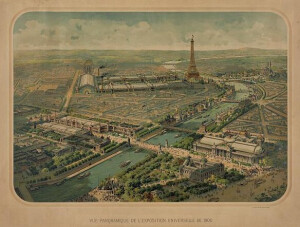
In 1862, they moved to Rue Croix-des-Petit-Champs. There, five years later, at the age of fourteen, Emile built his first instrument. That same year, his father was invited to participate in the Exposition Internationale in Paris, but due to an unfortunate misunderstanding, he was allocated too little space and withdrew his entry.
When Emile was only 17 years old, his father fell ill, returned to Mirecourt, and died that same year. Despite his young age, Emile took over his father’s business in Paris. Dehommais, a chemist and amateur violin maker, had been employed by his father in recent years and continued to work for Emile after his employer’s death. In late 1870, Emile’s first year in business on his own, Dehommais and Emile formed a partnership. They set up shop at 12 Rue du Faubourg Montmartre. The business was registered under the name “Dehommais et Germain.” Dehommais experimented with various varnishes and discovered a formula with which he believed he could artificially age the wood. Emile Germain built the violin, and Dehommais treated the instrument with this formula, making it appear as though the interior had also been varnished. Between 1870 and 1882, they built over a hundred instruments in this manner and sold them under the name “Dehommais et Germain.” The music magazine *Le Ménestrel* wrote about it in 1873; several violinists evaluated the result and, according to the journalist, spoke highly of it.
As “Dehommais et Germain,” they participated in the 1878 exhibition in Paris and won a bronze medal for their entry.
After breaking up with Dehommais in 1882, Emile moved to 62 rue Bourdaloue, where he lived for the rest of his life. In 1888, Emile got married and had two children.
In 1900, he entered two violins in the competition at the Exposition Universelle in Paris, where the French president sought to showcase the achievements in art, culture, and industry under his rule. Fifty-six countries participated in the exhibition, and the event attracted millions of visitors. Emile received a gold medal for this entry. Gustave Adolphe Bernardel was one of the judges and praised Emile Germain’s work at length.
The International Expositions in Paris in 1878, 1889, and the largest one, in 1900, brought prominent musicians to Paris. Through their performances at two of these exhibitions, they also became acquainted with Emile Germain’s instruments, after which interest in and sales of his instruments increased.
After Dehommais left, Emile worked without any employees for 8 years. During that time, he built over 500 violins. It was not until 1890 that he hired another assistant: Joseph Vautrin, a violin maker who had begun his career as a violinist and composer and had learned the craft at Chipot-Vuillaume in Mirecourt. The collaboration was short-lived; Joseph Vautrin returned to Mirecourt in 1892 and set up his own workshop. After that, Emile Germain did not want to hire any more assistants. Beginning in 1894, he had some of his instruments built in Mirecourt by Emile Laurent (père), who would continue to do so for him for eight years.
Emile Germain died in 1933. He left behind a large—and, in the opinion of many, beloved—collection of violins. As far as is known, he did not build any other instruments. There are many bows bearing his mark, but these were made by renowned bow makers, including Eugene Sartory.
Emile Germain was a prolific luthier whose body of work included more than 5,000 violins. Vidal describes Emile as an extremely skilled craftsman who, in addition to building new instruments, also restored old Italian instruments with “absolutely distinctive” expertise that he had learned from his father, who “had excelled in this field.” It wasn’t just Vidal who praised him; George Hart also wrote favorably about him.
Emile Germain built only a small number of different models of his own design; for most of his other instruments, he drew inspiration from the great violin makers of Cremona.
He used only high-quality wood, which developed a broader and deeper grain as his career progressed. He finished the violins he made in collaboration with Dehommais with a light-brown varnish; after Dehommais’s departure, he used a brown-orange to deep-red varnish, usually with black outlines on the pegbox and scroll.
The inlay, in which the black strips often dominate, is set quite far from the edge.
His labels are printed, but he wrote the year in the margin, across the text.
Dehommais and Germain, Paris, Rue Croix-des-Petits-Champs, 1878
Emile Germain, Paris, 5 rue Faubourg Montmartre. 1888
The instrument that The Netherlands Musical Instrument Foundation has in its collection dates from 1892 and is a magnificent example of what he built during his prime.
Tarisio, Cozio Archives, accessed in 2023
Hart G., 1875, The violin; Its Famous Makers and their Imitators, Dulau.
Vidal, A., 1889, La lutherie et les luthiers, Paris.
Cité de la Musique/Musée de la Musique, 19th-Century French Violins and Luthiers, 1998, Paris.
Archives Nationales de France, accessed in 2023.
Vannes, R., 1999, *Universal Dictionary of Instrument Makers*, Spa.
Piodras, H., 1924, Dictionary of Ancient and Modern Instrument Makers, Paris
Geneanet; accessed in 2023